
The Father of Sword and Soul
Episode 303
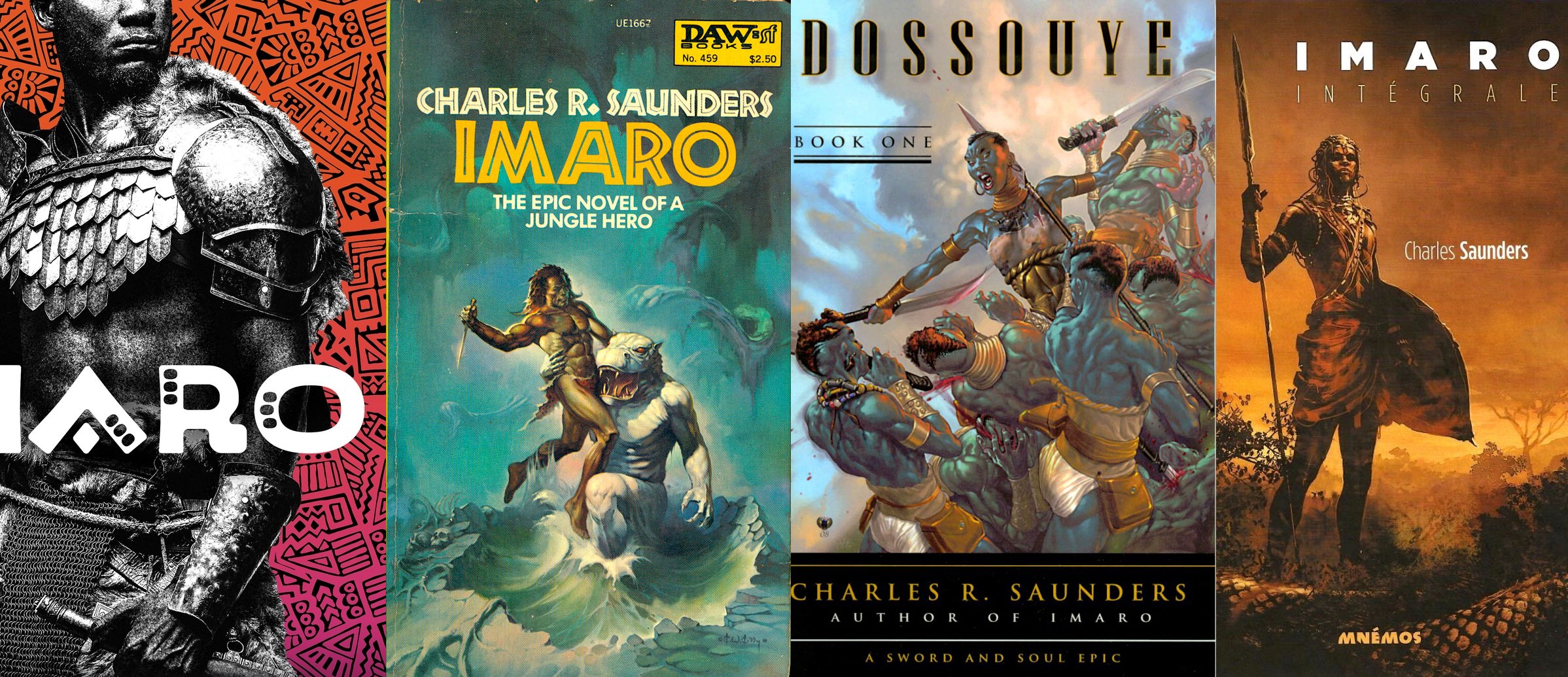
Charles R. Saunders loved Tarzan as a kid, but he was also repulsed by the racism in those books since Charles was Black. So, he created a counter narrative about a warrior named Imaro who lived in a fictionalized version of precolonial Africa. Charles had invented a new subgenre of sword and sorcery that he called sword and soul. His books were groundbreaking in the 1980s, but he was also way ahead of his time. I talk with Milton Davis, Sheree Renée Thomas and Troy Wiggins about a movement among Black fantasy writers today to reclaim Charles and his work. I also talk with journalist Jon Tattrie, who wrote a biography about Charles called To Leave a Warrior Behind. This episode is sponsored by IngramSpark. Get 15% off your first order of 15 more books at IngramSpark using the code IMAGINARY15. This offer expires at the end of the year.MUSIC LISTCast of Pods by Doug MaxwellAncient Awakening by Bjorn AlvaInterlude by Clemens RuhNight Music by Kevin MacLeodTimepass by Marten MosesCell by Eversafe
The Father of Sword and Soul transcriptBefore we begin, I want to mention this episode contains a discussion of a suicide attempt. So please be advised.
You’re listening to Imaginary Worlds, a show about how we create them and why we suspend our disbelief. I’m Eric Molinsky.
Jon Tattrie is a listener to this podcast, and he emailed me with a story. He used to work at a newspaper called the Halifax Daily News. He started working there in 2006.
JON: And when I got there for my first shift, uh, I was introduced to the team. And the most famous face by far was Charles Saunders. He was sitting right in the center of the, the newsroom. We called it the, the big desk with all the editors on it. He had written a column for the paper for, for years and wrote the editorial when I worked there. So that was when I first encountered him, was as this legendary, uh, local legend of nonfiction. Suddenly, uh, my boss.
So then when did you find out that he was a fiction writer?
JON: I first found out he was a fiction writer. When I was writing my own first novel, Charles overheard me planning my, my big, uh, first novel, a historical fiction novel. And one day I came into work and he had brought a copy of Imaro for me, and he handed me this orange brilliant novel with a warrior of some sort over a pile of fallen foes. I didn't know what to make of it, but I read it and I loved it, and I look forward to reading the rest of the Imaro saga. But as far as I knew at that time, this was just some little passion project Charles had done to write this novel as a lot of journalists do. I missed most of the importance of it that first time through.
Was he kind of self-deprecating or did he kind of undersell it? Was he like, well, yeah, I wrote this novel, or, or was he very proud, or how, how did he introduce the books to you?
JON: I would say he mostly introduced it in what I would come to discover is a very typical Charles way. And he introduced it to me as though he was making me appear already, because at that point, I hadn't published any books at all, and so the way he gave it to me was like, welcome to the club. You're, you're one of us now. And for me, that meant, uh, a huge amount to have his sort of confidence in me. Uh, looking back, I think he had probably run into so much confusion and, uh, uncomfortableness from people about the type of writing he was doing to sort of bafflement, I guess, that he kept it pretty separate from his journalism.
Charles R. Saunders was living in Canada, but he was African American. That warrior character called Imaro is considered to be the first Black sword and sorcery hero.
Sword and sorcery is a classic genre of fantasy that takes place in a mythic past where heroes fight with swords and magic exists. Many of these stories take place in a mystical version of medieval or early European civilizations. But the Imaro books took place in a fantastical version of ancient Africa.
A lot of the elements of the Imaro books are familiar to readers of sword and sorcery. There’s a dark wizard who destroys Imaro’s childhood. Imaro goes on a quest to a kingdom so he can find answers about his past. Along the way, he meets allies and fights enemies who are human and supernatural. He eventually gets married and has a family, but the forces of darkness will not let him rest.
MILTON: He basically created a new sub-genre of sword and sorcery.
Milton Davis is a fantasy writer and a publisher. He was a fan of Charles’s work and eventually became his friend.
MILTON: By, you know, creating a character, he was the first person to ever have a Black main character in sword and sorcery. And the fact that his character was a hero, that he wasn't a sidekick, that he was the center of attention, I guess you could put it that way. And that's something that, um, that we hadn't seen, not only in sword and sorcery, but in fantasy in general. Something that you rarely saw, you know? And even today you don't, you don't see it that much, you know?
Charles called his new subgenre sword and soul.
After Charles passed away in 2020, his former colleague at the newspaper, Jon Tattrie, started learning more about Charles’s life. Jon was so surprised and intrigued by what he found; he ended up writing a biography about Charles called To Leave a Warrior Behind.
Charles was born in 1946, and he grew up in Pennsylvania. Jon says:
JON: From a young age. He loved fantasy writing, absolutely fell in love with those worlds. You know, the, the, the joy of escaping into them, it just took him away. He had a, a decent childhood from what I can tell, but his father was not present, and that was very difficult for him, and especially when he was about five, and his mom left him to go work in, in, uh, Pittsburgh or Philadelphia. He was very, he had a very hard time being alone with his grandparents there. So he escaped into fantasy. And for Charles, the first hero he ever sort of won his heart was Tarzan.
But Charles had very conflicted feelings about Tarzan. The author of Tarzan, Edgar Rice Burroughs was a strong believer in the racist pseudo-science of eugenics. His Tarzan stories were full of racist depictions of Black Africans. In the movies, Tarzan was played by the white Olympic swimmer, Johnny Weissmuller.
JON: As he said when he was watching the movies, he wanted to create a Black hero that could kick Johnny Weissmuller’s ass. That was the main sticking point for Charles. He is like, what's this white guy doing, being King of Africa of all places? He loved the action, he loved the adventure, he loved the setting, but he called the racism, the, the stone in his shoe, the, the part of it that he just encountered over and over again.
In the 1960s, Charles went to college and got a degree in psychology. Then came the draft. He knew his number would be up soon. He’d have to fight in Vietnam.
JON: But instead in 1969, he moved to Canada, and by sending himself into exile and exile, he chose to renew as it were, he could have returned to the States, but he decided to stay in exile. That's where he first wrote Imaro, who also is in exile.
But he had a lot of difficulty settling in.
JON: He thought he’d have a better start in Canada. He thought, you know, this is the end of the Underground Railroad. Surely it's better up here. But he was often almost always the only Black man in his world and facing that discrimination in a kind of silent Canadian way. As, as Charles would say, in America, they say, you can't sit here. And in Canada, they say, sorry, you can't sit here.
Charles started teaching at a university. But after he lost his job, he also lost hope and a sense of confidence in his fiction writing, which he was doing on the side. At one point, he tried to end his own life.
JON: And he would have too, but he woke up not where he had left himself, but being rescued by firefighters. And I actually later talked to someone who knew one of the firefighters, but what Charles credited with saving him was Imaro. From Charles's telling of it, he, Charles Saunders was ready to leave, ready to die. But he credited Imaro with lifting him up and putting him to a place where he could be rescued. And he told people about his attempt on his own life because he wanted them to see that he hadn't failed. You know, at first he thought, oh, I failed at one more thing. You know, what, what, what are you going to do about that? But he came to see it as not a failure, but as a triumph as him facing the bleakness.
When a writer creates a character they care deeply about, I always suspect the character is a version of them, or the character embodies qualities they wish they had. Charles was a very private person. It’s hard to say how much of Imaro is a reflection of him. He used to say there wasn’t much.
But Milton Davis says there is one thing you can point to. Imaro didn’t know his father.
MILTON: Charles' mother and father got divorced early in his life and he never really had a relationship with his father. A lot of what Imaro was kind of came from that.
JON: And when we first meet Imaro in Nyumbani, that's Charles's name for his other Africa, Imaro in the very first scene is five years old, and he is mocked ruthlessly as the son of no father in this amongst his Ilyassai people. And we see his mother on his fifth birthday, abandon him to her people and say, she has to, for various reasons, she has to leave him there.
Jon mentioned Nyumbani -- the world where the Imaro books take place. Nyumbani is a Swahili word that means home.
Authors like J.R.R. Tolkien and George R.R. Martin did a lot of research into English history to craft their fantasy worlds. Charles wanted to take a similar approach to make his fantastical version of Africa feel authentic.
Troy Wiggins is a fantasy writer and a fan of Charles’ work. And even though he’s a different generation than Charles, he had a similar experience in that when Troy was a kid, he loved reading books like Tarzan. Then he tried rereading them as an adult.
TROY: I was like, yo! These books were racist as hell! Were they racist like this back in the day? Because I was a kid, right? I wasn't like, I knew what racism looked like in real life, you know what I mean? But not on the page.
Then he discovered the Imaro books.
TROY: I had already had a lot of done a lot of my own historical research. I was an African American studies major, uh, an African, African American studies major, and I had read a lot of work from African authors, um, by that time. So, the way it felt authentic to me was because it drew directly from the histories and mythologies that African people were sharing about themselves. And he was writing in response to, um, viewpoints that were not from the, the perspective of, of folks from those places, right? Folks from Africa. So, he researched first person, you know, historical accounts. Um, and I think that was vitally important because without the perspective of colonization, without the eye of racism, tainting the true depiction of those histories. That's what brought the authenticity to Charles' work. He was taking those firsthand first person accounts and using that to create his world.
Charles also wrote books about a female character named Dossouye, who lives in the world of Nyumbani. She was a soldier in an army of women. She saves her people from destruction but like Imaro, she has to go into exile.
Sheree Renée Thomas is a fantasy author and editor. She’s also written for Marvel Comics. She says, the first time she saw Dossouye and Imaro in a bookstore, she felt an immediate connection -- even before she opened the books.
SHEREE: I mean, and it was the covers <laugh> that got me at first and the names, and I'm thinking, huh, this is a Black writer. These are African names. These are, this is a Black woman character. And at that time when I was reading the work, I imagined it, the characters like, um, I don't know, like, uh, uh, like Grace Jones and <laugh>. He obviously had love and respect for Black people, which is not a given, and some of the work that I had been reading at the time, and I just thought, wow, the world opened up for me in a way that it hadn't quite before. Granted, this was, you know, work that was published a long time ago and we have a lot more people creating, um, African centered works from the continent itself. Right. You know, obviously he was not African and was not living in Africa, but for the time that he was writing it, I thought it was just extremely, um, revolutionary and, and extraordinary.
So, Charles did find his audience, or his audience found him. But that took a long time. In fact, his writing career was almost like an epic quest.
AD BREAK
In 1981, Charles finally made a deal with a publishing company called DAW books. There was a delay at first because DAW was going to advertise Imaro as the Black Tarzan on the cover. The estate of Edgar Rice Burroughs threatened to sue, so DAW had to come up with new covers.
They published a trilogy of Imaro books between 1981 and 1985. Sales started out weak and got worse over time. The publisher killed the series after the third book. Milton Davis is skeptical.
MILTON: Being a publisher. Now I know that there was no reason they wouldn't have, they wouldn't even consider publishing his books unless they knew that there was an audience out there. I think they kind of dropped the ball when they marketed it and they start trying to reach the broader audience, I think that's where you had to issue at. They were trying to find a way to introduce this character without, um, I guess upsetting people or getting the broadest application. And I think that's where, that's what a problem was with it.
Charles was entering a very white cultural space. That’s the whole reason why he wanted to write Imaro as a counter narrative.
Given the time period, you can imagine that the publisher might have assumed white fans of sword and sorcery weren’t interested in a Black hero, and there weren’t enough Blacks fans of the genre.
Sheree says, that’s not true. She thinks the publisher didn’t make an effort to reach Black fans of books like Lord of the Rings.
SHEREE: They may not always show up at your readings or at the conventions, but they are absolutely by the books. It's, to me, it's a no-brainer, but at the time, I can totally understand why it might've been considered a risk just because of the perception that people had about the genre in the first place.
Charles did get a movie deal for the character of Dossouye. But according to Jon:
JON: The movie people said, listen, Charles, we'd love to shoot this great story. However, a couple of things we're going to shoot in Argentina. We couldn't find any Black people. Do you mind if everybody's white? So could you rewrite it? So Dossouye is white.
The movie came out in 1986 and it was called Amazons.
MILTON: It was hilarious because, you know, you had these white women walk running around African names <laugh>
Again Milton Davis.
MILTON: Dossouye has a bull, a war bull named Gbo, and that’s her war companion. In the movie, they made it a horse. But he said, hey, I got paid more for this script than anything else I had been paid for in my life up until that point.
Charles’s career as a fiction writer seemed to have come to an end. This is where he shifted his career to journalism. He wrote a lot about the historic Black community in Nova Scotia. And as we heard earlier, he got a job at the Halifax Daily News.
But Charles had actually planted the seeds for Imaro’s comeback. He just didn’t know it yet.
In the late ‘90s, Sheree Renée Thomas was putting together an anthology book called Dark Matter: A Century of Speculative Fiction from the African Diaspora. Charles ended up contributing to the book. I asked her, how did she think of contacting him?
SHEREE: How'd I think of contacting him? He was on my shelf. <laugh> <laugh>. So my house is full of books, and so if I'm writing or working on an anthology that is looking to put into one volume at least many fiction stories by Black writers, I'm obviously going to have them already. A lot of them. The thing that was new to me was the ideal, and I know this is going to sound very, very strange, but I didn't know he was still alive because people didn't discuss him as if he was a living writing person contributing to the genre. So, when I start looking around, I realized, this man is in Canada, <laugh>, he's not dead, he's in Canada. That's how, that's how I was able to find him in Nova Scotia. And when we were talking about the project, he was very supportive.
He sent her a short story he wrote in 1984 about Dossouye. It’s called Gimmile’s Songs. He also sent her an essay he wrote in 1977 called “Why Blacks Don’t Read Science Fiction.”
SHEREE: I said, but this is not then <laugh>. And there are a lot of people who are writing the genre and they, they don't get published as widely in some of the major publications, but they're being published more often in literary journals and, and literary magazines, or they're just self-publishing the work themselves. I said, I think you should write a different essay that speaks to now versus then. So he wrote the essay that ended up being in the collection.
The new essay was called “Why Blacks Should Read (and Write) Science Fiction.”
Having two pieces published in Dark Matter brought newfound attention to Charles. He made a deal with a publishing company called Night Shade Books to release an updated edition of the Imaro series.
SHEREE: I was so excited to see it happen. And the men like, kind of swept him up. <laugh>, they like, they, you know, you know, so he was mentoring people and everything and I was just happy to see that he was publishing and that he was, you know, going, going to be doing a, a new novel. To me it was like, okay, my work is done. That, you know, there was terrific, you know?
Yeah, when he said the men swept him up, what did you mean by that?
SHEREE: Milton, and a lot of other, um, Black male writers began seeking him out and, you know, corresponding or, you know, calling and talking with him. Obviously that kind of very masculine active adventure work is work that a lot of, of, uh, brothers are going to be excited about and interested in.
When she said Milton, she was referring to Milton Davis. When Dark Matter came out, Milton had been writing his own African based sword and sorcery.
MILTON: I had done research and I really, and at the time Charles wasn't popping up in the research, but as I was working on it, I was like, somebody has had to do this before because it's just too obvious <laugh>, somebody wouldn't have done this. But I kept doing searches. I never came up with anything about him. But, uh, when they re-released his books, the Nightshade books, that's when I discovered them, because then his stuff was everywhere online.
He reached out to Charles. They discovered they had a lot in common like their very mixed feelings about the original Conan stories and how they built their fantasy worlds.
MILTON: We talked about the fact that we both were inspired by the same sources. He created Dessoye and I created, created my Sadatina, and they came from the same source, you know, that kind of thing, you know. And he was telling me about, about how he had written this book in the ‘90s, and he'd send it around and tried to get it published and, um, nobody would publish it. And I said, well, can I read the manuscript? And he said, yeah, you know, so he sent me the manuscript and I, I read it and I really loved it. And so I said, you know, I, I was kind of timid about it because I was still, you know, indie publishing stuff. I said, well, Charles, you know, uh, can I publish this <laugh>? He's like, he's like, yeah, you can publish it. And I'm like, oh, cool. You know? So that's when that ball started rolling. I'm like, like, Charles, just let me publish his book!
That was good timing because a year after Night Shade published the Imaro series, they cancelled the books. Charles wrote to a friend that they told him the books weren’t selling very well because, quote, fantasy is a white realm. Charles was furious. He said it felt like he was in a time warp because it was the same reason his other publisher dropped him in the 1980s.
Troy Wiggins says Charles may have been too far ahead of his time, but the zeitgeist was catching up with him by the 2010s, after Game of Thrones became a huge hit.
TROY: The culture was starting to realize how important fantasy was to our collective wellbeing. And I recall early social media seeing people discover Charles Saunders work in real time and being flabbergasted in the midst of all of our diversity movements and all of our belonging movements, that there was somebody already writing the kind of work we were wanting to read, or the fight had already fought for the space that we wanted to fight for in the 1980s before a lot of us were born.
Charles may have felt like he was in a time warp when the Imaro series was cancelled again, but he now knew his work was being appreciated. He was also making friends and finding a new community. Although Milton says, even though he talked with Charles fairly often, he didn’t know much about his personal life.
MILTON: We would talk about stuff, but we talked about a lot of smaller talk. You know, we were both born in July two day, our birthdays were two days apart. We both were Pittsburgh Steeler fans, you know, so we talked a lot about stuff like that most of the time. And, and, and, you know, and then we talked about writing a little bit and stuff like that. But I knew nothing about his family. He, he rarely talked about his family at all. Matter of fact, he didn't talk about his family period.
Charles had family in the U.S. that he kept in touch with, but less and less over the years. He had also been married and divorced. By the time the pandemic hit, Charles was single and living alone.
Jon Tattrie says he hadn’t talked with Charles after The Halifax Daily News shut down.
JON: I wouldn't have expected anything else because in the two years I worked with him, I, I never heard tell of him going out with anyone or having any sort of social life. It just seemed to be working home. So, no one was surprised when after work closed, he ended up just staying home. But then I got an email in 2020 from a stranger saying he'd gone missing, and they hadn't heard from him in a while, and they didn't know anybody in the world who knew Charles. And so, I just started at first, assuming all was well, and tried to find out what was going on with Charles, check to see if he was doing okay.
But Jon’s worst fears were confirmed. He learned that Charles had died. Not only that, he was buried in an unmarked grave. It took months for Jon to find it.
JON: it was just, it was one of the worst days of my life just standing there in the rain looking at this patch of grass that my friend was under. So for me, that's when it became very personal to, to find someone to claim his remains. And that's really what, why I keep talking about Charles because I want more people to claim him.
Jon Tattrie, Milton Davis and others launched a fundraiser to create a grave marker and a monument that has an illustration of Imaro on it.
So many people dream of being fiction writers. They might wish to have a career that’s similar to the writers that inspired them. They hope their work will be successful to the point where it can live beyond them in popular culture.
I imagine on his better days, Charles may have felt confident that he was leaving behind an artistic legacy, but I imagine he must have also had moments of doubt when he wondered if his work would end up being a drop in an ocean of content.
That’s why Jon isn’t the only one who wants to make sure more people claim Charles Saunders.
AD BREAK
A new edition of Imaro was published in 2025. It featured a new cover with a quote from Nnedi Okorafor, describing Charles as a trailblazer. That quote should carry some weight, if you know about Nnedi Okorafor. She is a trailblazing writer in her own right who coined the term Africanfuturism.
But Charles’s legacy is not dependent on the publication of his books. He had an influence on younger writers, and acted as a mentor.
After Troy Wiggins discovered the Imaro books, he got in contact with Charles and asked if he would give editorial feedback on one of his stories. He says Charles’s notes were invaluable.
TROY: He very much centered what the story needs. Especially with short fiction, you don't have a lot of real estate to the world building to do characterization. You have to really get it down on the page as quickly as possible. His notes to me were very much to the point, you don't have space for this, this doesn't serve the story. You need to expand this for the sake of the story. And like, just those interactions, again, went to, went on an impact my career as an editor, you know, five, ten years later.
Troy says he also felt inspired by the fact that Charles was a Black writer in the diaspora who set his fantasy world in Africa.
TROY: Because I'm not from Africa, you know what I mean? You know, my folks have been in the U.S. South for generations upon generations. And so for me, even being black, I still did not feel like those, that mythology was always mine to, you know, try to tell story from. But then he also inspired people like me to create our own, uh, work and I think to validate that Black people and African people do have fantasy, uh, a mythology that is worthy of craft and fantasy stories. From that our histories are not all, you know, regressive, they're not all pain. That we have deep cultural mythology, the historical, uh, basis for mythology. Also inspiring writers to write their own fantasy, uh, from their Black cultural experience but maybe from a fantasy New Orleans in the 1930s, or maybe from, you know, just taking my example of fantasy Memphis in the 2010s. You know what I mean?
Troy also co-founded a magazine called FIYAH, which launched in 2017.
TROY: I would say there is a, probably a direct, at least for me, a direct through line from the work of Charles Saunders to the inception of FIYAH Magazine. The, the primary purpose when we found it was to publish short fiction from Black and African authors, because we had some data that showed that the publication rates for Black authors in the, in those markets were extremely low, almost laughably low when you think about, um, comparison to other groups. And so we, we, we decided, hey, if nobody else will publish this, we will.
And Charles was generous in passing along opportunities to other writers like Milton Davis.
MILTON: He got in contact with me one day and said, Hey, this company got in contact with me. They want me to, um, develop a character for this role playing game. And they said, if I do this, they would, um, also publish any books that I write about this character. And, you know, they offered him a certain amount of money to do that. And I was like, well, Charles, you know, you need to jump on that. You know, this is like a good opportunity and stuff like that. And he said, well, I told him to get in contact with you that you could probably write something for him. I'm like, Charles,
But wait, why would he do that?
MILTON: Uh, well, we had that discussion and sometimes he would lose his, his temper with me because I was always in bed. He, and he, you know, he got upset. He said, I'm, he said, I don't care about that. He said, I, I just care about my legacy. So he didn't want anything that was going to take his focus off of doing that.
His own characters in his own.
MILTON: Exactly. And he didn't, he didn't want to do that. He didn't want to deal with, he was like, I don't want to do that. That's how serious he was about that, you know? Because if the situation that he was in that would've been really helpful, but he was like, it, it wasn't about the money at that point. It was about, you know, completing these stories and getting this stuff out there and seeing it the way that he wants to see it. And I, and I can, I can say one, one bit of satisfaction I do have is that before he passed away, that was starting to happen. People were starting to find his stuff again.
But he’s concerned that might slow down over time.
MILTON: As, as time passes, you know, publishers are doing less and less marketing, they're putting more and more onus on the authors themselves. You've got some publishers now that won't even pick you up unless you've got a certain amount of, uh, social media following the fact that he doesn't, well, he's not here with us anymore. The fact that he doesn't have that means that whoever wants to promote his work is going to be having, is going to have to put the energy and the effort behind promoting it and marketing it. And I don't think that, um, that's happening. And I don't, I don't even know if it's going to happen.
And there wasn’t a lot of money in publishing his work to begin with.
Sheree Renée Thomas says another problem is that time is moving on culturally. After an author passes away, their work is frozen in time -- and Charles was ahead of his time to begin with.
SHEREE: You know, there's a whole lot of the, a whole lot of writing that's taken place since he first published those stories. He might've been somebody that could have created new characters or who would, could have guess written some, um, comics for Marvel or other, you know, other comics companies because he already had that sensibility. But just, just in the time that I've, I've known Charles, um, and the conversation that's, that we had earlier about the things that were already on our shelves that definitely were science fiction or definitely speckle to fiction, that conversation has gotten even larger. And the thing that's interesting to me is that at the time when I was doing the research for Dark Matter, it wasn't a time when a lot of African writers were interested in pursuing science fiction and fantasy, at least the ones that were being published. Right. In fact, there was a resistance because it wasn't considered literary at the time. Those days are, are, have changed quite significantly.
Yeah. So it sounds like in one way, you know, honoring his legacy is not just, uh, celebrating his work, but finding the next Charles Saunders to make sure that the next Charles Saunders gets the support that you know they need.
SHEREE: And they're out there, there, there are people who are publishing now. I just, I'm just very conscious now of looking in places -- you're not going to always find them in the mainstream and getting their work out there to a larger audience. And I feel like if, you know, had Charles lived, he would have loved it. Would've loved it. And it might have been a whole other, a whole other renaissance for his work at that time.
One thing that hasn’t changed is the need for voices like Charles Saunders. And given the backlash in recent years to cultural diversity, we need to hear those voices more than ever.
That’s it for this week. Thank you for listening. Special thanks to Jon Tattrie, Milton Davis, Sheree Renée Thomas and Troy Wiggins. I put a link to Jon’s book about Charles Saunders in the show notes. My assistant producer is Stephanie Billman.
If you liked this episode, you should check out my 2024 episode African Sci-Fi Looks to a Future Climate. It’s about how African writers of speculative fiction are depicting climate change.
We have another show called Between Imaginary Worlds. It’s a more casual chat show that is only available to listeners who pledge on Patreon. Between Imaginary Worlds comes included with the ad-free version of the show that you can get on Patreon. You can also buy an ad-free subscription on Apple Podcasts.
If you donate to the show on Patreon, you’ll get access to a Dropbox account, which has the full-length interviews of every guest in every episode.
I’ve also selected 25 of my favorite full-length interviews from that Dropbox account and curated them into folders on Patreon. In that collection, you’ll find my full length interviews with authors like P. Djeli Clark, Andy Weir, Becky Chambers, and my full length interview with audiobook narrator Luke Daniels.
You can also subscribe to the show’s newsletter at imaginary worlds podcast dot org.