
Is Money Ruining Fanfiction?
Episode 308
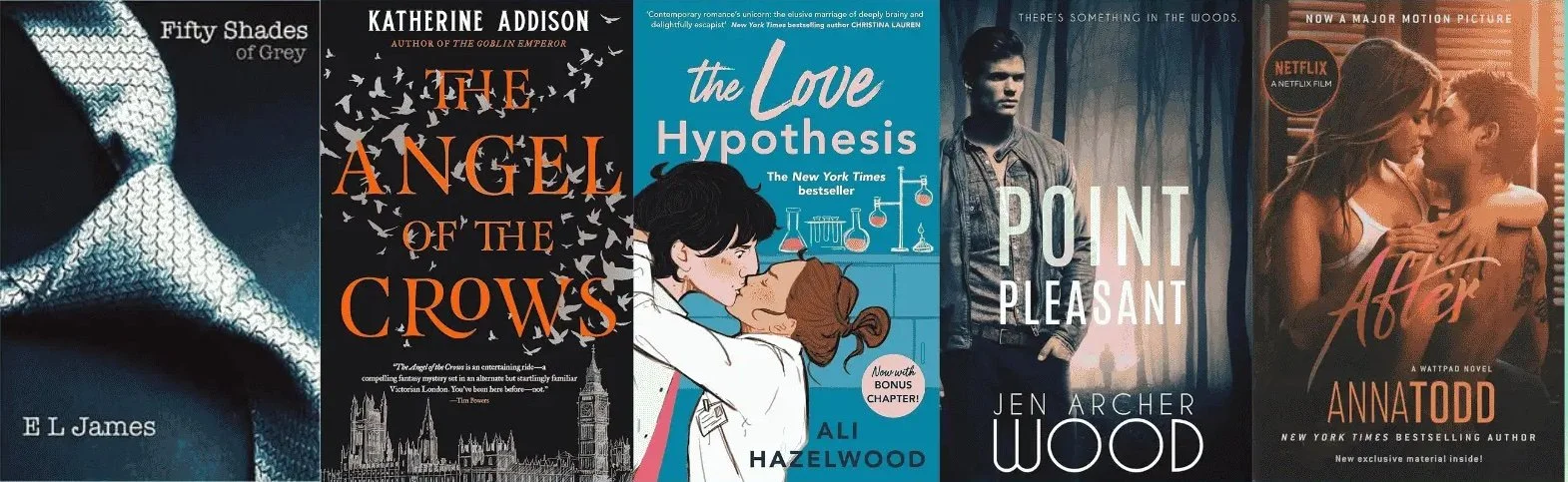
The world of fanfiction has changed a lot since our 2017 episode, Fanfiction (Don’t Judge.) At the time, I thought that 50 Shades of Gray – the novel that began as Twilight fanfiction – was a fluke. It turned out to be a harbinger of a controversial fanfiction-to-media pipeline. I talk with Elizabeth Minkel, editor of the site Fansplaining, about how a financial motivation has altered the way fanfiction writers tell stories and the characters from pop culture they choose to focus on. We also discuss how the conversations around representation in fanfiction have become more complicated over the past decade.This episode was inspired by an episode of The Allusionist podcast. If you like this episode, you should check out our interview with Archive of Our Own co-founder Francesca Coppa and our episode Swept Away by Romantasy, which looks at how the blending of romance and fantasy took over the publishing industry.MUSIC LISTEvery So Casual by Blue Dot SessionsA New Year by Scott BuckleyHopefully Flies by Magnus MooneRunning a Quick Errand by SanctusPixel Pay by Sanctus
Transcript of Is Money Ruining Fanfiction?
You’re listening to Imaginary Worlds, a show about how we create them and why we suspend our disbelief. I’m Eric Molinsky.
My friend Helen Zaltzman has a podcast called The Allusionist, which is all about language. She recently interviewed Elizabeth Minkel about Fanfiction. Elizabeth is the editor of the site Fansplaining, and she co-hosted their podcast.
My assistant producer Stephanie Billman and I did an episode about fanfiction in 2017 called Fanfiction (Don’t Judge). We looked at how fans were writing stories about pop culture characters that the media companies would probably not approve of. And we interviewed one of the founders of Archive of Our Own, which is a huge website for posting fanfiction.
So, I felt confident that I knew fanfiction well. But when I listened to Helen’s interview with Elizabeth Minkel, I realized I am out of the loop. So much has changed over the last 9 years. So, I asked Elizabeth to come on Imaginary Worlds because I have many questions.
You don’t have to listen to our previous episode to understand this one, although it can give you context about the history of fanfiction. But there are three terms we’ll be using in this episode that I want to clarify.
When we did our episode in 2017, the movie version of 50 Shades of Gray had come out a few years earlier. It was based on a novel that was originally fanfiction about Twilight. There’s a term for that: Pull to Publish. That’s when a writer pulls their fanfiction off line, changes the names so they don’t get sued for copyright infringement, and then gets it published as an original novel.
I had no idea that in the last 9 years, Pull to Publish has become much more common. A bunch of Harry Potter fanfiction has been repurposed into original novels. And there's a movie coming out called The Love Hypothesis that is set in the real world but it’s based on fanfiction about Rey and Kylo Ren from the recent Star Wars trilogy.
That brings up the second term to want to clarify: “shipping.” When fans imagine characters in romantic relationships, they’re shipping them. This type of fanfiction can be about characters that are already in relationships on screen or in the books. But often it’s a departure -- like taking canonically straight characters and putting them in queer relationships.
The term for characters of the same sex in a sexual relationship is slash. The word slash refers to the punctuation mark used to label these stories. For example, a story about Kirk and Spock falling in love would be labeled Kirk slash Spock.
I started my interview with Elizabeth by talking about 50 Shades of Grey. I told her when we did our episode in 2017, I thought 50 Shades was a fluke. I had no idea it would turn out to be the beginning of a trend. She said a lot of people in fandom thought that way – and she sometimes uses the word fandom as a shorthand for fans in fanfiction.
ELIZABETH: Because a lot of fans really resented 50 Shades of Gray. They didn't think it was good erotica writing, right. They were like kind of upset that this was the one that got picked, you know, is when there's so much good erotica written by fans. It didn't really set a model, it was just kind of like, oh, that nonsense over there. But things were happening in the, you know, behind the scenes within publishing. More and more people were coming from fandom into publishing houses, into acquisition roles, into these editorial groups that were thinking about the kinds of stories that they wanted to commission. And so more pulling to publish started to happen as the 2010s went on, but it was still very much kept as a secret. You would really want to pull your works offline, hide any connection that they had to the original source material. And that kind of continued pretty much for most of the decade until the very end when we started to see some kind of huge booms of pulling to publish where they started advertising, where the stories came from.
That leads me to Heated Rivalry.
It’s a really popular show about gay hockey players that was adapted mainly from the second book in a series of novels called the Game Changer series. I was surprised to learn that the first book in the series had come from fanfiction about Steve Rogers and Bucky Barnes -- who are also known as Captain America and The Winter Soldier in the MCU. Fanfiction writers have been shipping those characters for years under the couple name, Stucky. But the backstory of that first novel, Game Changer, is a little complicated.
The writer, Rachel Reid, claims the characters in the first book were original to begin with. But she wanted feedback on her writing in a safe space. So she renamed the characters Steve and Bucky, and posted the chapters as Stucky fanfic. And it’s not unusual for fanfiction writers to put the characters in real world situations and take away their superpowers.
After getting enough feedback, Rachel Reid pulled the work offline, changed the names back again, and got it published as an original novel.
ELIZABETH: And so it's a kind of weird circular thing that she claims she did, because it's like, oh, you wanted it to be original, but you just ran it through a Stucky, like wash cycle just to, to do what exactly. I'm not sure. Um, and if you actually go back and look at this author's fanfiction history, she was writing other things in the fandom. So it's possible that this is just a story she's telling to say she always meant for it to be original, and she just kind of used the fandom to, to publish it, which I don't think is that flattering a story, but it's also totally possible.
I mean, do you, when you read these, when you read the books, or when you, when you watch the show, do you feel that the character, let's say who's based on or had been initially a Steve Rogers type character, does he feel like a Steve Rogers character? Does the Bucky character feel, I mean, like, is there anything that even feels like those characters?
ELIZABETH: Yeah, I mean, I, as I I'll say as I haven't read those books. I have watched the show. Um, I do think the show was playing with it a little bit because they styled the actor playing what had originally been the Steve Rogers character very much in that way. He's wearing like a, a tight under armor shirt as he like does his like Robocop kind of jogging. But I also have been in fandom long enough that I'm a little bit cynical about a lot of NY uh, a lot of AU in the sense of like…
AU is alternate universe?
ELIZABETH: Uh, exactly. Um, it's like a lot of them don't feel like the character that much. Right. And you kind of buy into the internal logic of a story. And so like to write a really good AU I think that characters should be able to ring out across any setting that you put them in. And I, I actually don't think every fandom works for AU, I think sometimes a character is so contextually tied to the source material. You know, I write plenty of AU in my own fandom now, which is a superhero fandom. It's X-Men. And a lot of the time they are in the modern day. They're not superheroes. They just have their powers. And so you're trying to make them really feel like the ones we recognize from the comics or the movies or the books.
Well, you made a really interesting point in your conversation with Helen about how many of these characters to begin with already felt like original characters that they had kind of like stretched the skin over, not to be too, um, <laugh> Buffalo Bill and, uh, and Silence of Lambs.
ELIZABETH: No, that's, that's appropriate.
<laugh>. Yeah. They had stretched the skin over, um, you know, these, these original characters to be like, Hey, look, you like Stucky? Um, but in fact it was something original. Anyway. But it's funny because I remember, you know, I came in with a lot of this stereotypes of fanfiction writers or these people that probably can't hack it as real writers. And Stephanie really talked to me how, you know, these are really very good writer, you know, these are really good writers and, and urge me to read some of the stories. And then when people would say, well, why don't, don't you just write original characters that say, well, but I really want to write this character. The point is I really want to write Steve and Bucky, but I want them to do things that the, that the MCU that the, the Disney Corporation will never let them do.
ELIZABETH: You know, part of this is because I think fanfiction has changed pretty dramatically over the past few decades. Like, I, I started reading and writing fanfiction in the ‘90s, the world today. I mean, taking away all of the money elements or whatever, right. You know, publishing people, plucking people out. The actual nature of the stories is dramatically different than it was in the ‘90s. I mean, certainly like the ‘90s stories were very different from the ones in the Kirk Spock scenes in the ‘70s too, right? Like these stories reflect the time in which they're written, but also the, like the mechanical means in which they're produced. Right. You know, like obviously fanfiction changed a lot when it came online, not least because you could do a lot of different shapes of stories. You could start doing, you know, a hundred words, you could do 300,000 words, right? And you couldn't have done that in a physical zine. But one thing that I've noticed since the archive of our own began, um, which was in the late 2000s, that's the biggest fanfiction website, they made some really specific design choices that I think have fundamentally altered the way people write fanfiction. And subsequently the way they read it, one is they kind of surfaced the metadata right at the top with the tags. So like the names of the characters, the tropes in particular. And so when I was a younger, if I wanted to read, I don't know what's a, what's a trope like sharing a bed, there's only one bed left at the hotel or whatever. Right? Popular trope, time immemorial. I would have no way to find that. I would just have to stumble upon it. Right. You know, there was a, a forum that I would read and people would be like, anyone know of any stories that where this happens? Right? And you'd be like, oh, thank God someone knows of one story where it happens. Because you'd have to kind of manually catalog those if you wanted to have any sense of what the content. Whereas when the Archive of our own was created, they put that right at the top and you could click on it. And if you love only one bed, you can click on that tag and you can be taken to thousands and thousands of stories across different source material where they only have one bed. And you might not even need to know who only has one bed. You're just, these are some two guys. And you love this dynamic. And so when I started Fansplaining in the mid 2010s, we started to hear from listeners, my podcast partner Flourish Klink and I, listeners would write in and say, you know, I don't even care about who these characters are. I just want to read only one bed. I, I just want to read like when one of them gets sick and the other one nurses them. Like, if it's well written, I'll read anything. Right. Just very much like people are in romance, you know, they don't need to know these characters. They don't know the characters in advance. They're new to them. And I think because of the nature of these platforms now being so tag focused, that fundamentally changes the ability that the ease at which you can find tropes first. Meanwhile also at the same time, you have tons and tons of romance people coming into fandom. And so the line started to get really blurry and, and, and fandom people going into pro romance, writing original romance. And so you have kind of this diminishing of what I think of what I think of as a very classic fanfiction thing where you're really inspired by the source material. You can't stop thinking about it and you want to write more stories in that world, right? And I think this is what's undergirding this sort of collapsing of this, of this system right now where people are now treating it as this kind of synonymous thing with romance and this thing that can be easily extracted into pro romance. And so it like kind of blots out a lot of different other kinds of stories.
AD BREAK
Before I interviewed Elizabeth Minkel, I spoke with my assistant producer Stephanie Billman. She’s still pretty involved with fanfiction.
Stephanie told me one of the big changes in the last 9 years is that a lot of fanfiction writers are putting their work behind paywalls on different websites. She says this changes the vibe around fanfiction because:
STEPHANIE: They go into influencer mode and they're like really promoting their stuff to the point of annoyance. And that completely negates the point of fanfiction to me, like you're not supposed to be trying to monetize it. You're sharing your love of this fandom through writing stories about that fandom.
Elizabeth agrees that the financial motivation has been a game changer for fanfiction.
ELIZABETH: Yeah. Oh, absolutely. It fundamentally has. And I, I think part of it is like, you know, I am older school in this way. Obviously, there are many people who are older than me in fandom, but like, I had always been raised with it as a very non monetized space. I really value the gift economy. Like I'm a professional writer and I have no desire to monetize my fanfiction. This is like, it's just my fun writing. And you know, it's not to say that it's any less serious. I think sometimes I find it more stressful than my professional writing. You can't make the story work, but that's really key to me. But like, you know, I think even going back to 50 Shades of Gray and those Twilight publishers since then, in those 15 years, we've had a dramatically large numbers of people coming in without these existing norms, right? And they're like, yeah, why wouldn't I? Right? And the, the rise of side hustle culture or like, you know, you always have to be monetizing your con hashtag content, right? And so it's like, yeah. You know, like, why wouldn't I sell access to this chapter? Right? And the only huge barrier that's stopping people, well A, is the law and, and B is The Archive of Our Own, which is the main fanfiction platform is staunchly non monetized. Like if you say anything about money asking for money in any way on your story, it will get taken down because it's a violation of the terms of service. And so that's like kind of the last barrier from people just wholeheartedly selling things left, right, and center. Um, and I think because of that, you still have a substantial portion of the fanfiction world that kind of clings to these non-monetary values. And then you have a lot of misinformation kind of passing along through telephone where people are like, if a single penny gets exchanges hands or fanfiction, like, we'll all go to jail. And it's like, I don't know how these <laugh> these, you know, these, these ideas got formed, uh, over time. because that's not factually true. Fan artists, people who do visual art of these characters are the default now is to sell their work. And it, it makes them seem very transactional. I rarely see a fan artist. You, you don't often see fan artists drawing stuff that feels super Id like, or like unpopular. It seems like they're very much interested in drawing things that will sell. And they fan artists will put up these commission sheets that'll be like, I will draw the guy's head for $40 and I'll, I'll add his neck for 10 more dollars and I'll do a torso for 10 more dollars. Right? And it's like, so transactional. Like, here's how much of this guy you can get for the amount of money you have to spend. And that's very different than I, I spent hours and hours of my free time creating this labor of love to share for you for free.
Yeah. Another thing that seems to have changed too is when we did our episode 10 years ago, fanfiction about real people was somewhat taboo. You know, so it's not just you're writing fanfiction about, uh, Steve Rogers and Bucky Barnes, but about, um, Chris Evans and Sebastian Stan being in a sexual relationship regardless of what their real life sexual orientation is back then, I feel like there was more pushback on that. But that line has shifted too, right?
ELIZABETH: Yeah. It's a little tricky. because I don't, I wouldn't say, oh, everyone's really into that now. I think it still remains a taboo line. It's, it's interesting because it's always been this kind of taboo line within fandom. So it's like people who are already cool writing about the characters, which a lot of people outside fanfiction are not. They're like, how could you make, you know, Steve Rogers and Bucky Barnes have sex. That's, that's not right. They don't do that on the screen. You know, like, how could you have these thoughts or whatever. Which weirdly still people have these reactions and it's like, just let it go. Who cares? Like, you know, like you're allowed to think whatever you want about these characters, but you also have fandoms that spring up around the real people independently of anything else. So hockey has been a huge one for a long time. And actually, speaking of Game Changer, the Game Changer series, um, you know, a lot of people say that one of the biggest ships in that is, you know, it's a Canadian and a Sidney Crosby and, uh, Ovechkin, I believe.
Those real hockey players? I don’t know.
ELIZABETH: Yeah. Famous hockey players, <laugh>
Okay. I have no idea. <laugh>,
ELIZABETH: I'm pretty sure that's the big ship. I'm like, I, I have some hockey friends and like, they move too fast for me to follow who's a big hockey ship. But like, that was a big one for a long time.
I heard Harry Styles, like is another one that people wrote a lot of...
ELIZABETH:HarryStyles and Louis Tomlinson, um, yes. I'm trying to think of some other ones. And yeah, that was one also that was independent of any fictional source materials. So it was like, just about the guys and like in those, they would often, um, not be musicians, they would have other jobs. Right. You know, like I know, I, I know for a fact being friends with some people in this fandom that because, uh, Harry Styles once worked as a baker. There are a lot of stories where that's his job, like his actual job. Not a, you know, not a baker in and pop star and waiting. But I think you also have this sort of breakdown happening in mainstream pop culture, mainstream culture about how much people feel like they have access to narratives around real people. Right? And, and you constantly see things that are like real person fiction, you know, especially when it comes to actors, right? Like, I don’t know if you followed this, but, um, uh, the actors on The Bear last season, they had to like start separating in the press tour because people were shipping them and they didn't want to like, add fuel, right? And shipping their onscreen personas, they just kind of sent some fraught stuff, right? And then fans were always, you know, over analyzing like, oh, why did this actor appear in this promo or this one and not this one? It must mean something and it probably means that they had scheduling conflicts, but like, you know, you know, and it's just like RPF, I know it’s not real.
RPF is short for Real Person Fiction or Real People Fiction.
In our original episode, we celebrated the way that a lot of fanfiction writers were reimagining mainstream characters in ways that could be seen as transgressive or subversive. I asked Elizabeth, has that conversation become more nuanced or complicated over the years?
ELIZABETH: Oh, for sure. I mean, I, I also think that even then there were debates that I don't think fully made it to a mainstream narrative. Um, I think that there's this like kind of very strong historical narrative about fanfiction that is women, you know, resting the texts from men and like the male creators, male corporations, et cetera, queer people finding the representation, they don't get on screen, right? But then you actually look at fandom and you look at the output and you see, I think the biggest thing is overwhelming whiteness, right? And like, this was always true, right? I mean Kirk and Spock, sure. But like, you know, if you go through the entire history of fandom, it is two white guys, two white guys, two white guys in in slash fandom, that's male/male historically. Obviously there's a, a parallel lineage of male female, and again, extremely white and female/female, which is a much smaller group. And also biases, you know, against that too, because it's like prioritization of white men in particular has always been a thing. So these internal biases, I think are hard for a lot of white fans to, to really face because I think they have internalized this narrative. It's just a fundamentally transgressive act. And it's like, well, you can still reify these things. And then of course the, the, I think one of the, aside from race, the biggest thing over the decades, even way back to the print times has been the prioritization of men and the kind of demonization of women, which is ironic because, you know, there's tons of non-binary people and trans people and fandom, but there's a lot of cis women. And yet female characters very, very kind of set to the side, often demonized, um, in the pursuit of making the male/male romance be the center. You know? And it's like you don't have to make her evil to get her out of the romantic picture. It's like the canonical girlfriend or whatever, right? And fem slash which is female/female, uh, has always been this kind of tiny, overlooked fraction of the broader fan works, and it's tricky now, I think you still, you see way, way, way more stories about canonical male characters gender bent to be female. So female Steve Rogers female Bucky Barnes, you know, in my newsletter, the rec center, which we, we feature, uh, fanfiction recs every week. Um, and we rely on all our readers to send in. We have thousands of readers and they send in recs through a big database and we do fem slash February every year, which is female/female ships. And, you know, we're not closed off. If you want to write female Steve Bucky, like I'm all for it. But in the last few years, we've almost exclusively received stories that are ships that are originally male, male and are now being written as female/female. And I'm like, that's, that's quite interesting that people still really don't want to connect to the female characters in our media and often blame the source material. They say, oh, well she was written poorly
While they're transcending the source material to begin with.
ELIZABETH: Exactly. And like also, while they're like inventing men out of whole cloth, there have been some very famous, uh, fanfiction ships where the, the men on screen, you have like three lines and, or like two lines with each other. And now we've got this man's rich inner life and it's like, you made up a guy, you can make up a lady too, or just like connect to a lady on screen. And it's the same with race. I think people are always like, oh, it's where it's just because there aren't, you know, Black characters don't get a lot of screen time and then you see, see Black characters that do get screen time cast aside and no one wants to focus on them. And so it's, these are systemic problems, they aren’t the fault of any one person writing their favorite two white guys.
I want to bring Stephanie back because she has a personal experience with this. And it has to do with something called reader inserts.
In reader insert stories, often one of the characters will be labeled Y/N, which is short for Your Name. That way the reader can imagine themselves in the story, interacting with a superhero or a celebrity. Stephanie says to make it work, YN has to be written as generally as possible.
STEPHANIE: The idea is there's supposed to be no, no description of the character. No, like mannerisms that are, that would be specific to a certain person. However, that tends to not be the case. What ends up happening is they'll describe something like putting your hair up in a messy bun or like the reader blushed. And I'm like, okay, I'm black. I'm not going to blush and I'm not going to put my hair up in a messy bun. Those types of things are the problem. And a lot of times that happens because the writer is white and they're writing it from their experience, and they blush and they can put their hair up in a messy bun. I've seen lots of discourse about the fact that because of the way that these reader inserts are written, they're very, they exclude people of color and you know, white writers get defensive and they're like, well, you know, I don't know how to write from a Black person's experience. It's like, you are not supposed to be writing from anybody's experience. It's the point of a reader insert. Like if it's written well, and I've re-read plenty of them that are written to the point where there's no description at all. Like, I could easily insert myself in there if I wanted to.
You were also telling me too that, um, sometimes they'll, they'll take that advice and say, oh wow, you're absolutely right. I need to work against my internal bias. But then they write something that's supposedly from a Black perspective and it's super cringey.
STEPHANIE: Yeah, yeah. That, that's actually worse. Like, I've seen Black reader inserts from written by white people where they'll have like big hoop earrings and you know, they'll talk about, you know, their baby daddy and like going to get their, you know, stuff using their food stamps. And I'm like, are you serious right now? This is, this is how you see Black people?!
So let’s say a white fanfiction writer is thinking, you're right. I want to write from a Black perspective but I don’t know how. Would you want them to try anyway, or at least just develop other Black characters in the story?
STEPHANIE: Yeah, I think developing other Black characters in a story is good because you can organically create black characters that have nothing to do with the lore of the property that you're, that you're writing about. That's possible. I just don't think they consider that option. I will say this, some of them will actually specifically call out for people of color beta readers. They'll freely admit, I don't understand, you know, I'm in the Midwest and I've never like, personally like met a Black person. Can someone help me if I'm writing this Black character? Can you help me make it more authentic without being stereotypical that I respect? Like, yeah, you can do a middle ground. And like I said, there are reader inserts that I've read that are really good and don't have any description at all of the person. You can do it. They just, for whatever reason, refuse to accept that they have a bias.
AD BREAK
In our original episode, one of the big questions we asked was who has the power? At the time, we were looking at the push and pull between the studios and the fans that they were trying to please.
Elizabeth says that the imbalance has become very lopsided. She thinks all the industry contractions and corporate mergers have made the Hollywood studios feel more untouchable than ever.
But at the same time, romance and romantasy – which is a blending of romance and fantasy – have become hugely popular genres for the publishing industry.
ELIZABETH: And now we have the publishing industry coming in as well and, and like kind of putting their hand very aggressively over fanfiction. And so in a way it feels like fanfiction writers have less power than they did 10 years ago to me, I feel I feel a lot of despair when I think about the current state of things. And I think that one of the things that I managed to articulate for myself recently, the, the thing that's bothering me the most. Fan art decided to monetize itself years ago. We're selling our art, right? We're making prints. You like this fan art? I'll make a print for you. Right. You know, I'll put it on whatever. There is an element, even though I, I don't love it, that is still very one-to-one. It's still within fandom, you know, it's like, I pay you, you make the art for me, right? Or you made the art and I buy it. It's quite different when you have these publishers coming in and kind of tapping certain stories for huge deals. And I think this is also a reflection of how broken the publishing industry is. And anyone works in publishing, we'll talk about this, right? That like, there's no more midlist, there's no more wide range of things. There are these giant blockbuster deals that need to pay out massive dividends, right? Obviously it's, this is the problem in Hollywood too, but like publishing industry it seems much more stark. And so it's not just that the publishing industry is coming through and tapping these, these stories and turning them into these big books and selling these big movie deals. It's just like, it's a couple and it's for a ton of money, right? So it starts to feel like the publishing industry is going around with like a lottery magic wand that they might tap on you. And I think that incentivizes you to further kind of tool your works, which is supposed to be like the thing you want to write because you love it, and just start to think about what's marketable, right? And it's like, start to think about what they might want, what will get me the most hits that will attract their eye in a specific kind of way that will say, here have, have $2 million. Right? You know, the, the biggest story on The Archive of Own for years was All The Young Dudes, which was about Remus, Sirius from Harry Potter, massive, massive numbers. Millions and millions and millions of reads. Um, and that sold at the London Book Fair a few months ago for a seven figure deal.
And by the way, this be meaning, meaning this is, uh, it, it starts out as shipping these two characters, Remus and Sirius, and then takes the names off and resets them. Not in the Harry Potter world,
ELIZABETH: Frankly. I will say I have literally no idea how this author is going to do it because I have looked at this story out of academic interest, even though Harry Potter fandom is, is very dead to me. because this was my ship in the 2000s, those two men. But it starts when they are 11 and going to Hogwarts for the first time, and then it takes it year by year. And it's very much, I mean, at least what I saw of some of the earlier bits, very much like the early Harry Potter books, just with these characters. And so it's got all of the like, pranks on the giant squid kind of hijinks. Right. You know, and it's just like, how on Earth are they going to take this book away from the setting? It's so, so tied to this world, right? Like, you know, and I don't know, go, go ahead. Like they, they, they're getting millions to do this, right? But like, that's supposedly what was sold. They said it's going to be set in the ‘60s instead of the ‘70s. It's going to be at a boarding school still,
But it's not called Hogwarts then.
ELIZABETH: No. because he's, and one of them is still a werewolf, wolf boy,
I'm sure that their lawyers have gone through and just be like,
ELIZABETH: Oh, for sure
You can like literally word for word change this, change this, change this, and we can defend this in court.
ELIZABETH: Yeah. I mean, I think this though that you'd fundamentally have to change it from the bottom up because it's like, and that's what Alchemized that's what SenLin Yu who the, the second most popular story was, was Manacled, which became Alchemized, which was a huge but huge bestseller. My best friend, who is my longtime podcast partner read the original fanfiction.
Fanfiction of?
ELIZABETH: Of Manacled, right? Which is this big Hermione Draco story in the Handmaid's Tale-esque world. And, and Flourish said, and it's fine, uh, tried to read the pull the published version with a whole new, you know, world building and tapped out after five chapters and was like, I can't do this anymore. And they were like, world building is hard, but it's not this hard <laugh>, right? Because it was just so tortured, like trying to, and you know, whatever, some people seem to enjoy that book, but I've heard from a lot of people that it was just like, it's tricky. There's so much in fanfiction that we, it's not to say a fanfiction writer can't write an original world, but it's like so much of the pleasure of fanfiction is that you're kind of playing with this world that we all know. Like I, I read and wrote Harry Potter fanfiction for years, and like it's a rich, expansive world full of like many, many, many underexplored areas. And you know, your fanfiction is responding to everyone else's. It's not just responding to the source. And so when you're trying to sever all of that, I think, I think it gets a little lost sometimes, people are like, oh, you know, they, they can't do it without the training wheels. And it's like, uh, no, it's just not as good without, without the networked text. It's not as good without that like, communally built scaffolding that we're all kind of working with and that we're all referencing. I think also too, some of these are being pulled from AUs that already drawing in a lot of other parts of the culture like hockey, right? Like she was a big hockey fan, you know, and so she's bringing kind of her hockey fandom into the creation of the AU world for Steve and Bucky. And that's really normal. That's what we all do. I, when I write my stories, if they're set in the modern day, I'm pulling from my life. I'm pulling from other things that I've seen or watched or read recently that, that were meaningful to me. And you know, in resonant, right? So it's like all these things that we do when we create original fiction too, we're doing within fanfiction. It's not just like we're kind of trapped in this very rigidly canonical world where we're just like trying to see exactly what's in the corner of the scene we already saw.
So when you look at the future of fanfiction, what are you most excited about in terms of the possibilities and what are you concerned about the most?
ELIZABETH: Uh, well, something very timely. Um, and this will have been a few weeks by the time this comes out, but, um, one of the biggest things is AI. And there was a huge blowup going on right now in the fanfiction world, in the Heated Rivalry fandom because, you know, we've, we've seen people using generative AI to create often like secretly, you know, it's, it's, it's very, fandom is very, very anti AI. And it's partly like, why are you using AI? This is for fun and for free. Like use your imagination. This is kind of sad, right? Like, well, you need the computer to have the fun, imaginative thoughts for you? But because the Heated Rivalry fandom in particular has been so, so massive so quickly, like there's so many people are coming into fanfiction for the first time through this, um, like probably I would say millions of people, right? You know, just like a massive explosion. And the stories in this fandom have so, so many reads and are being written at such a pace. And so a few days ago, uh, someone, a group anonymously published a document saying there's a really big generative AI problem in this fandom. And they had created a script that searched for, I guess when you copy paste directly from Claude, it pulls in some of the formatting from the tool. And so obviously this is a bit of a witch hunt energy of people trying to find who use generative AI. But I think it's more speaking to the speed at which this fandom and other new hot fandoms are moving that is like, frankly unsustainable, right? So it's like tons and tons of people, extreme appetite of readers just want more and more and more as quickly as possible, give me more stories. We want it now, right? And so that incentivizes people then to use these tools. And then you're just kind of churning out generic stuff as quickly as possible for massive numbers, hoping that publishers will notice the most popular one. And then they'll tap it and they'll give you $2 million and then you get your book deal and your movie deal, right? And it's like, what a nightmare this is.
It's funny, I asked you, what are you most excited about it seems like there's a lot right now, <laugh>.
ELIZABETH: I thought it was like excited and worried. Um, I'm excited about my fandom. I still love, love, love writing fanfiction. And so the fundamental act of fanfiction isn't changing. Nothing, nothing I've described is going to take away that desire. And it is, it is a bit of a bummer to think that like these forces are, are reshaping the way that readers are even going to approach my work when I post it. But I think that the fundamental act remains the same of people. There's still so many people in fandom who just want to write these stories. Right? You know? And like there are so many people doing such creative weird things that like money will never touch because it's just weird. Right? You know? Or like, if you actually look at the numbers, uh, my friend, uh, Destination Toast is a, is a well-known fandom stats person. They, they generate all these interesting, an analytical stats about fan works. And I was just looking at something the other day, and I think the majority of stories, the vast, vast majority of stories have like one, like one kudos or, or zero, right? And so it's like, maybe that's a little sad, but it's also like there's tons of people just putting stuff out there, right? Because they want to post it and maybe it's bad sloppy amateur, maybe it's illegible <laugh>, it doesn't matter. Like, and the fact that that's still the vast majority and it's not all just people trying to hack their way to success in a publishing deal or whatever is, that's very inspiring to me. because it feels very, it feels very anti, anti this moment. It feels like, like that is a continued resistance against the broader cultural moment when we're in.
Does that also, I've heard this expression, “no, betas, we die like men”. Is that what that goes to <laugh>? What does that mean?
ELIZABETH: <laugh>. Okay. I think everyone should have a beta though. So a beta reader is like your editor. Sometimes people use alpha reader like way back in the day, which would be more of a developmental editor, like a first reader. Um, I have two betas. They do pretty substantial edits. They gimme really significant feedback. They read the drafts as they go along. They're my, my people that I bounce ideas out off of. But yeah, a lot of people just don't do it. And so they've kind of post that as a like, yeah, no one's, no one's beta read this. It's a little bit of a joke. Like, no, we, we die like men.
It's like, I'm so anti this sort of corporate greed push that, like, I had no beta readers, no editors. I haven't even spellcheck this <laugh> this is raw man <laugh>.
ELIZABETH: But yeah, I mean, I think that is part of the unpolished of it. Or like, there's something that the big, the big amateur spirit. Like I'm 16, this is my first story. Like, it's just what I wanted to see. Like, that's so lovely. Right? And like I think a lot of that's gotten erased over time. I think especially as people, younger people have come online having to put their whole selves online, I think they feel somewhat self-conscious, right? And they don't want to put their weirdest, most unpolished, messy self online. And so I'm hopeful that at least that spirit can continue through. Because I read things all the time where I'm like, I hate this. This is so weird. I never want to see this again. Like, good for you. Like, this is not for me, but like, I'm really glad that you just wrote what you wanted to write, even if I don't think that I ever would want to, you know, that I don't want to read.
Yeah, I remember the first piece of fanfiction I ever read in the ‘90s, it was in the nineties. It was Buffy fanfic and it was Spike's leather jacket. And who sounded like him.
ELIZABETH: Stop!
And I was like, this is fantastic. This is like, I freakin’ love this.
ELIZABETH: That's really funny. Yeah. I think you see way less of that anthropomorphic, they call it like, from the perspective of an inanimate object. This used to be such a thing and now I never see it. And I'm like, what happened? We're losing the old ways. Like, should I be writing from the perspective of Magneto's helmet? Is this on me? Because I write them just adding sex? I, it's fine. Whatever.
<laughs> I want to read that so badly!
ELIZABETH: <laugh>, Yeah. Or like, you know, when I first got into X-Men fandom, it's such a robust, um, AU fandom. And I, I was, I was trying to describe, I was like, they have everything. There's one where they're Bronies and there's one where they're birds. And then I realized it was the same author and I was like, this person's just doing whatever. <laugh>.
That's amazing.
ELIZABETH: You know? So I like, that's not gone. But I do feel like now people like are trying to write romance novels and so it's like, it's, they can't be birds. Like that's not, that's not going to, that's not going to sell.
Our 2017 episode was called Fanfiction (Don’t Judge) because that was the subject line of the email Stephanie sent me when she first pitched me the idea. I thought it was funny because there was a lot of cultural bias against fanfiction back then.
That stigma is not as strong as it used to be. In fact, I think now the main conflict is not with the culture at large, but within the community itself. It’s like the writers are saying to each other, “This is My Way of Doing Fanfaction -- Don’t Judge.” That’s a more challenging conversation to have.
That’s it for this week, thank you for listening. Special thanks to Elizabeth Minkel and assistant producer Stephanie Billman.
And if you like this episode, in 2018, we put out a separate episode that was a full length interview with Francesca Coppa, the co-creator of Archive of Our Own. We also did an episode about Romantasy in 2024.
We have another show called Between Imaginary Worlds. It’s a more casual chat show that’s only available to listeners who pledge on Patreon. In the most recent episode, I talked with podcaster JR Forasteros about why we are both totally obsessed with the show Widow’s Bay on Apple TV.
Between Imaginary Worlds comes included with the ad-free version of the show that you can get on Patreon. You can also buy an ad-free subscription on Apple Podcasts.
If you donate to the show on Patreon, you’ll get access to a Dropbox account, which has the full-length interviews of every guest in every episode. I’ve also selected my favorite full-length interviews from that Dropbox account and curated them into folders on Patreon.
You can subscribe to the show’s newsletter at imaginary worlds podcast dot org.