
Episode 296
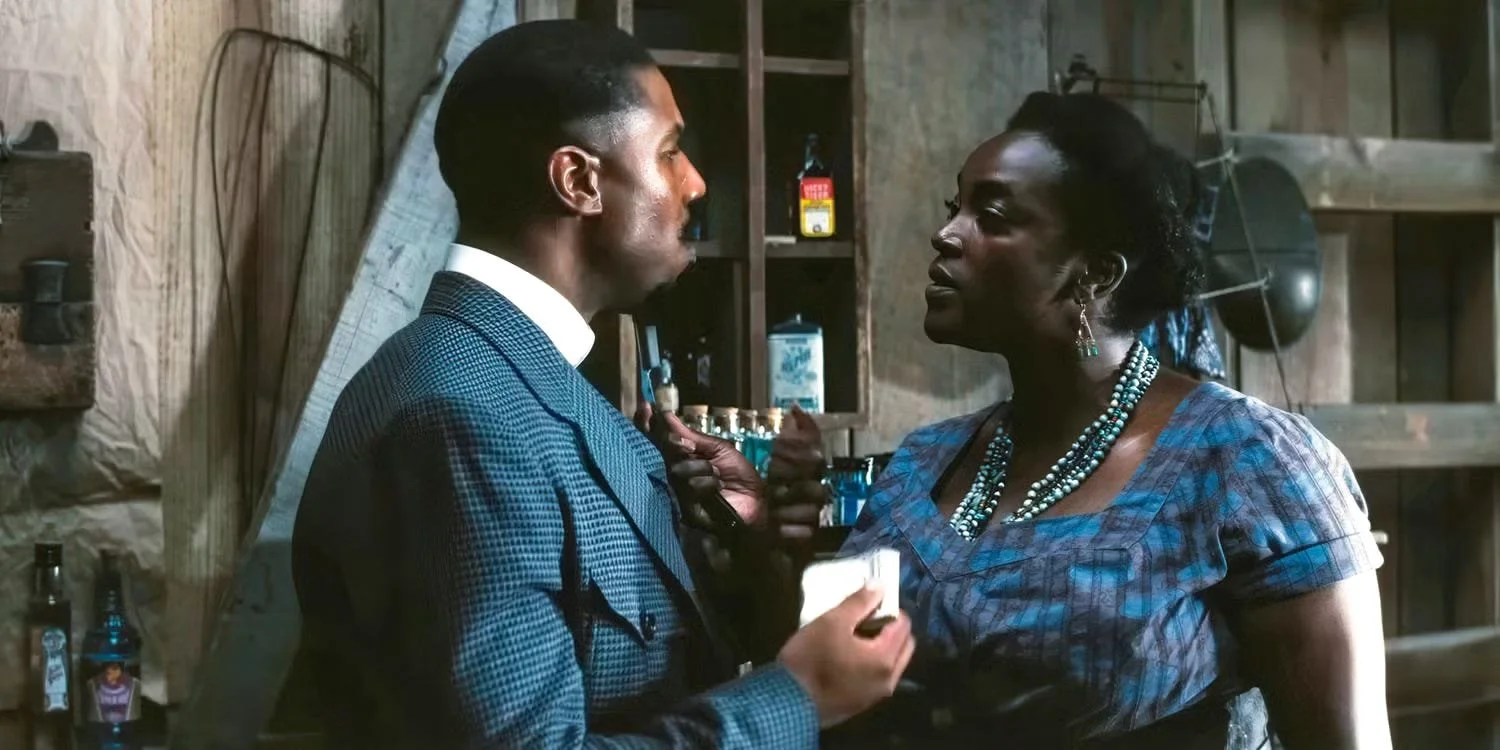
Sinners got a historic 16 Academy Award nominations, which was remarkable for a film with vampires. But the film is also a rich exploration of race, religion, culture and music in 1930s Mississippi. Professor Yvonne Chireau played a key role behind the scenes. She’s a historian of the spiritual tradition of hoodoo. Since hoodoo and voodoo have long been reduced to horror tropes, she was brought on as a consultant. She also worked with actress Wunmi Mosaku, who earned an Academy Award nomination for playing the character Annie, a conjure practitioner in the story. I also talk with Professor Kinitra Brooks, who is writing a book on conjure women. She explains why Annie’s wisdom, bravery and romance felt validating for her – partly because Kinitra’s great-grandmother was a conjure woman. This episode is sponsored by Mizzen & Main. Get 20% off your first purchase at mizzenandmain.com with the promo code IMAGINARY20.MUSIC LISTGhost Hunt by Sixteen WheelersA Woman Like You by Peter CrosbyDevil in a Can by Walt AdamsEmpty Aisle by Blue Dot SessionsDesert Moon Serenade by Tellsonic
Sinners Gives Hoodoo Its Due transcriptYou’re listening to Imaginary Worlds, a show about how we create them and why we suspend our disbelief. I’m Eric Molinsky.
This is Yvonne Chireau. She’s a professor at Swarthmore College, and she’s a leading expert on Hoodoo. Hoodoo is different from Voodoo. Voodoo is a religion. Hoodoo is a set of spiritual and folk practices that include working with roots, herbs, charms, and calling on the spirits of ancestors.
YVONNE: I get calls from people asking me to help people lift spells and things off of them. And I have to underscore, I'm a historian. I'm not a practitioner. I'm not an expert in the traditions.
One day she got a call from a movie producer. He wanted her to consult on a film for Warner Brothers. She was not surprised, or star struck to get a call from Hollywood.
YVONNE: I've done work in Hollywood. I've done work on documentaries before. And so I, I've become, and I told him immediately, I'm very particular about who I work with, uh, basically because the traditions that I study have been exploited. And so I didn't want, and he said, oh, no, this is Ryan Coogler. And I said, oh, okay. Ryan Coogler. So I, of course, I asked my daughter, I said, who's Ryan Coogler again? <laugh>
Ryan Coogler wrote and directed the Black Panther films. He also wrote and directed Creed, which revitalized the Rocky franchise. And wrote and directed Sinners – the movie they wanted Yvonne to consult on. She agreed to set up a meeting with him.
Ryan Coogler started describing the plot of Sinners to Yvonne, and then he mentioned there are vampires in it. She said, no. I don’t do horror. I asked her is that because in the past, the horror genre has spread negative stereotypes about hoodoo -- or does she just find horror to be scary?
YVONNE: It's actually both. Um, I, I am a very tender person, <laugh>, um, and I, I've never really enjoyed horror. Um, I get it, but I don't get it. But it was also that, that idea that, uh, looking at hoodoo, looking at our sacred traditions, our sacred, uh, African based traditions as a kind of horror, that was really problematic to me. Um, and that's certainly how it's been when you see hoodoo and conjure, it's always through the lens of horror. You never really see this as a sacred thing. You never really see it the way that, uh, you see other religions. So, so I had, so it was both of those things. And Coogler, uh, to his credit, he, he said, oh, you're going to like this. And I said, okay, tell me more <laugh>. And, um, I immediately liked the idea of something that was based on a, an original story, because, you know, as a historian, a lot of the things that I look at have to do with stories, stories that are told, stories, myths, legends, things that historians don't like to look at, don't like to make sense of. But this was an original story that he wrote, and I, I, I was pulled in immediately. So, um, he, he, he, he dragged me in. He dragged me into it. And then they'd call me in the middle of the night, they say, oh, okay. What, what would she throw? And, you know, <laugh>, I was like, okay.
That's right. Because I was just thinking, right, you've got vampires, you have to shoot most of it at night. So they're probably like, it's like three in the morning, and they're like, <laugh>, is she up? Let's just give her a call.
YVONNE: Yeah. You know, it's, it was, it was fun. I mean, I, I, I, I said that I would make myself available, but there, it was a really tight schedule. And I, I'm so thrilled that, you know, it's gotten the kind of appreciation, because everyone worked very, very hard. They worked their hard, their heart out for this thing.
It was definitely appreciated. Sinners was a box office hit and it was nominated for 16 Academy Awards, which is the most any movie has ever gotten. Here’s a quick synopsis without giving too much away.
The story takes place in 1932 in Mississippi. Michael B. Jordan plays twin brothers who go by the nicknames, Smoke and Stack. They fought in World War I, and they worked for Al Capone in Chicago. Now, Smoke and Stack have come home to create a juke joint. They’re on the lookout for the Ku Klux Klan, but they don’t know that vampires exist. So their dream of making a space for music and dancing turns into a nightmare.
A lot of Yvonne’s work had to do with the character of Annie played by Wunmi Mosaku. Annie is a conjure woman, which is a practitioner of hoodoo. Her ex-lover is Smoke, one of the twin brothers that Michael B. Jordan plays.
SMOKE: You know, I been all over this world. In cars. Ships. Trains. I seen men die in ways I didn't even know was possible. But I ain't never saw no roots, no demons, no ghosts, no magic. Just power. And only money can give you that.
ANNIE: You fool. All that war. Or whatever the hell else you been doin' in Chicago. And you back here in front of me. Two arms, two legs, two eyes, and a brain that work. How you know I ain't pray and work every root my grandmother taught me to keep you and that crazy brother of yours safe every day since you been gone?
Kinitra Brooks is a professor at Michigan State University. She’s an expert on the horror genre, and she’s writing a book about conjure women in real life and in fiction.
KINITRA: This all started by recognizing that my great-grandmother was a conjure woman. And so I talk about her throughout the book. A lot of the project is based on her. So I have this sort of macro project of the conjure woman in the Black South. But I also have this microcosmic project of doing the genealogy and family work that's in support of that. And recognizing how the systems of power affected the women in my family and their ability to practice as they saw fit. And where they film Annie's cabin, because they filmed it in Louisiana, is actually the plantation where my great-grandfather was born. It was a weird sort of thing. because I had just gone to that, to that plantation. And I went there to see the slave cabins, and there was a cabin right in front of the property. I start going that way. And the guy who the, the caretaker was like, no, no, no, that's for a movie. He was like, he was like, the actual cabins are in the back. And then I'm looking at the movie and I'm like, that's the cabin that I saw. So that was the first amazing thing. But also that weekend, one of my good friends, Clint Fluker, he calls me and he goes, Kinitra, what the hell were you doing on my screen kissing Michael B. Jordan <laugh>. And I said, wait, what? I was like, okay, maybe you know a gorgeous fat Black woman from Louisiana who talks a lot of shit and carries a knife. I was like, okay, I could, I could see that and practices conjure. I was like, okay, okay. That, that I could, I could definitely see that. And it was just, it was like seeing like an iteration of my great-grandmother on screen.
Before we get to how the character of Annie is portrayed, we have to understand who she was portraying. Sinners was filmed in Louisiana, but it takes place in Mississippi. That may seem like a small distinction, but Kinitra says it’s not.
Hoodoo or conjure is not an organized religion, it’s a more informal spiritual practice. In fact, there’s a variety of practices.
KINITRA: But it is primarily African religious tradition based in ancestral veneration as well as herbal knowledge, which is often referred to as root work. So you would use those herbs and things like that to heal people. A lot of conjure women were also midwives. They were, um, medical specialists in their own, uh, ways, particularly in the system of enslavement. But even as post emancipation, conjure women were often associated with being healers. Conjure men as well. And we have to remember that Black folks didn't change to Christianity and weren't converted to Christianity in large numbers in the South until around the 1830s. So for hundreds of years, Black folks were practicing hoodoo. So a lot of these practices were moved into the Black church tradition, and a lot of times, conjure women had to sort of go underground. They existed, but not in a sort of formalized role in the way, um, that the Black preacher did. Right. And having that sort of associated power. So a lot of conjure women went to the kitchen, they went to the garden, they assumed those places as spaces of power and people would visit them in their homes, which became this small sort of religious and medical space.
That’s why when we first meet Annie, she is selling herbs and roots out of her home to local kids.
GIRL: Just this, Miss Annie, and a pinch of High John.
ANNIE: All right, now don’t sell none of this on the way home, I don’t want your momma coming at me crazy later.
GIRL: Yes, ma’am.
ANNIE: Thank you.
Yvonne Chireau says the role of a conjure woman in the 1930s wouldn’t be that different from a conjure woman in the 1830s.
YVONNE: She's a healer. She's a healer of the body, but she's also a healer of relationships and the healer of the social fabric. Sometimes that healing requires a kind of protection. Uh, in my book, I call it harming. And people don't really like to say that.
So, when people get, uh, concerned that you talk about harm, is it because, uh, the, the, the, the stereotype that everybody knows about voodoo, which people may confuse with hoodoo, is the hex, the voodoo doll. Like, like that is a trope in horror movies going back for decades. Is that like, oh God, do not, do not get close, don't, don't in any way connect the real practices with that stereotype.
YVONNE: Yeah, yeah. I, I absolutely think that's it. That, okay, that, that's, that's the totality of this thing to do charms and spells that hurt people. But I mean, as we saw in the, in the film, there's charms to protect people. There's charms to, and again, coming out of slavery, who's to say that harm isn't just, who's to say? I mean, because that's a world where everything's flipped. You know, you can't win. If you're a slave and you, and you run away, you're stealing yourself if you know. So who's to say that harm is not a way of achieving a kind of justice or balance, but yeah, but that's, that's the main thing that, oh, voodoo, voodoo, hoodoo. It's, it's this scary thing. Um, and in the hands of Black people, indeed, the idea that this kind of supernatural power was very frightening. Anything that, uh, humanizes these traditions that have been exploited, anything that revalues those traditions, those spiritual traditions that have been marginalized, I’m all for it. But it's a thin line. And that's why I think the horror thing is really tricky, because, you know, we, we, we, horror brings fear. I don't want anyone to fear hoodoo. I want people to respect it.
So, in hoodoo or in conjure, what is the power of the ancestors exactly. Is it, how, how does that work?
YVONNE: Yeah. Yeah. The ancestors are exactly how he shows that they are a touchstone to that which came before. So we all have ancestors. Some of our ancestors were geniuses, some of them were gangsters, <laugh> or not so, or whatever. And it, it just connects you to this thing, time, space in ways that are bigger. And I'm not saying this for hoodoo, I'm saying it's important in hoodoo, but for all of us. So in hoodoo and, and conjure, it's so much more important for Black people because there's a chain of ancestorhood that's broken with the middle passage. So in hoodoo conjure, because so much of it turns on fragments of African wisdom, herbalism, spiritualism practices that were lost or could have been lost and had to be reconstituted. The ancestors play an important role.
And the role of Annie is so much more important to the film than I realized.
AD BREAK
From this point on, we are going to delve deeper into the plot of Sinners. So spoilers ahead. Although if you’re afraid to watch the movie, you can listen and learn about the story without having to see it -- although it is a great movie. It’s definitely worth seeing.
I asked Yvonne Chireau to take me back to the beginning. After she agreed to work with Ryan Coogler -- what happened next?
YVONNE: They didn't even have a name for it when we were working together. So, uh, he told me the story, you know, we made an agreement that, that I would work with them. They, they wanted me to come down there. I said, well, I'm, I'm in the middle of the term. I don't really want to do that. Um, and they were shooting on location in, uh, New Orleans. And I said, uh, I can, you know, we'll do this long distance, as long as we can. So I immediately started to set up meetings with the actress. And the way that they told me about it, I didn't know the whole story except what, uh, Coogler had told me, you know, the outline of the thing. But, uh, working with the actress, um, uh, Wunmi Mosaku on bringing to life this conjure woman, and that to me was so compelling. The idea that we could bring to life, you know, this is a historian's dream we can bring to life characters who really existed. So I worked very closely with Wunmi who had the script, and we talked a lot about, well, who, what, what was a conjure woman? What would she do? What would she look like? What, you know, and everything down to how she would embody this person. So it was really a wonderful co-creation, working with an act, an actor, uh, using my historical background and trying to embody even the movements of the conjure woman. And so, and, and because it's collaborative, and this is the really wonderful thing, how does she pray, so basically, we co-created a person.
So, so it's interesting. So you didn't get the script, but you, you met with Wunmi, I assume, over Zoom, probably.
YVONNE: Yep.
Um, and so then you, as you developed the character, did that change? Did she start changing things to the script, or was this all about like, how do I, you know, how do I, what, what's going on with me emotionally? What's my character's backstory? Like? Yeah, like what was that like exactly.
YVONNE: Yeah. Yeah. This is, this is what was so wonderful about it and why I'm grateful that I had to do this. So I work in religion. Religion is something where it's a matter of belief. It's, you know, well, do you believe that Jesus walked on water? Do you believe that the angels are in heaven? And a lot of conjure, uh, turns on this idea of, of beliefs, like, you know, do you believe that the ancestors are with us? Uh, and this is something I told Coogler when we initially talked. I was like, because he, he, he described that scene
If you have seen Sinners, you know the scene she’s talking about. It is a cinematic tour de force.
As I mentioned earlier, the twin brothers that Michael B. Jordan plays are creating a juke joint. The entertainment is provided by their cousin Sammie, who is the son of a preacher. Sammie is a young blues musician although he sounds older than he is. And his music has a magical quality to it, literally.
ANNIE: There are legends of people born with the gift of making music so true, that it can pierce the veil between life and death. Conjuring spirits from the past and the future.
While Sammie is playing, we see the spirits of ancient African dancers and musicians moving alongside the people in the juke joint. There’s also a traditional Chinese dancer following one of the Chinese American characters. The characters in the juke joint can’t see the spirits, only we can. We also see a breakdancer, a hip hop DJ, and a funk guitarist. These are spirits from the future, or the future for people in the 1930s.
So, Ryan Coogler was describing this scene to Yvonne:
YVONNE: And I said, uh, what you're doing is describing ancestral time. And he said, what? And I said, yes, this is in ancestral time. The idea that all time exists in one moment. All right? And this is something that we, we know from looking at African originating traditions, the idea that the dead are not dead. They're, they're alive, and they exist in a time that actually overlays our, and he, he was trying, and this was before they shot it. He said, yeah, I'm trying to get this thing. And he described it. I was like, what are you talking about? But he was trying to bring the ancestors of music and sound together in that moment.
Kinitra Brooks was deeply moved by that scene.
KINITRA: I cried. And you know, this is also where Afrofuturism and everything, because, you know, I view Afrofuturism as a theory of time where the past present and the future exists as one. And that was seeing that on screen, that was also seeing how Black folks see their lives. I, when I talk about horror and Black horror and possession and ghosts and everything, and it's like some ghosts Black folks don't want to get rid of because we believe we live with our ancestors. And can you imagine those of us who participate in ancestor veneration, we're walking around like that every day that our ancestors from the past are with us. That, you know, there's this sort of proleptic anticipation of our descendants and knowing that we're doing the work so that our descendants can live better lives. But also this acceptance that I will one day be an ancestor. And we see that with Annie, right? Annie's not afraid to die. Annie's like, we have work to do on the other side. There's someone waiting for us. So death is insane as this thing to be feared. It's simply a transition. So I thought, I thought it was an absolutely beautiful sequence. And we also have to note that for any immortality had the fear that death had for other people,
Immortality being a vampire,
KINITRA: It being a vampire existing without access to your ancestors.
ANNIE: Vampires is different, maybe the worst kind, the soul gets stuck the body, can’t rejoin the ancestors, cursed to live here with all this hate, can’t even feel the warmth of a sunrise.
The actress who played Annie -- Wunmi Mosaku -- was born in Nigeria. She grew up in the UK and now lives in the U.S. Yvonne says when she worked with Wunmi, the idea of connecting with her ancestors really appealed to her.
YVONNE: Very strong ancestral tradition in Nigeria that we something know about. So we talked a lot about that beyond the character. But it was a chance for her as an actress to sort of see how she felt about these larger notions that were implicitly part of her cultural heritage, and as well as the cultural heritage of Black Americans. So even there's a point in the film where she adds a word that the conjure woman wouldn't have spoken. She adds the word Àṣẹ. Àṣẹ is the word from Yoruba. Like, amen. Right. It's a, it's a word. A conjure woman in Mississippi would not say that, but she wanted to do that for herself because she is bringing her own ancestors and calling them to be there. So it was really fascinating, there was a lot of it that was unplanned.
So I know with, with any artist, there's always that one thing that you're like, really struggling to get right. You know, you're like, oh, that's the thing we worked on the hardest. With you and Wunmi. Was there anything that you, you, you know, because it sounds like you told her a lot of stuff. It seemed like a very good back and forth. Was there any stuff where she's like, oh, I'm still working on this. I'm still trying to get this right?
YVONNE: Yes. The prayer. The prayer. And that's why in the end, when she added the Yoruba prayer, I was like, go for it. I mean, of course, some of the historians they picked, they, they picked at me. I was like, she decided that!
<laugh>.
YVONNE: But, you know, uh, the prayer, how, how do you, how do you pray? And, and, and she was struggling with, you know, because conjure, it's a Christian practice, it's an African practice, you know, in the, in those communities, when this tradition came about, there were Muslims doing this. There were Native Americans. So what, what would the prayer look like? So we, we struggled with that. And I think in the end, she just sort of let it go, and she enacted it herself, and that's why she, she added that Yorba word in there.
Annie says the prayer while she is refilling the mojo bag she gave to Smoke to keep him safe.
CLIP OF PRAYER
So you were not on set. Um, but the props, I imagine around her were incredibly important and incredibly specific. Um, what was important for you? Like, you've got to have this in her, I think it's like her home is also kind of a store at the same time. Like, what, what, what does she have to have there?
YVONNE: Yeah, so they, that was very early on, even before we started meeting, they would say, well, would she have tarot cards? And what, what would this house that she lives in look like? You know, in the end, they did their own research and they just, they checked in with me, well, is this too crazy? Or is this too wild? And I was like, no, she wouldn't have tarot cards because, you know, if anything, she would have playing cards. She would throw bones, but not dice, you know. So it was, uh, they, they had an excellent, uh, prop master and excellent researchers.
Kinitra appreciated seeing all those details. But she had one criticism. There’s a scene where Smoke lays flowers at the grave of the child he and Annie had. Their daughter died very young.
SMOKE: Papa’s here, papa’s here.
KINITRA: When Smoke goes out to the grave to lay the flowers, they have a bottle of milk there. And they also have like a little, like Egun stick, which is a stick to for ancestral stick that's used in traditional African religious practices. The Egun stick I could see that being there because it helps call down ancestors and honors ancestors. But milk, this is the South <laugh> without full refrigeration. I understood the idea behind the prop, but it just doesn't make sense within you. You're not going to put milk out, in that heat. In two hours, it's curdled.
Yvonne says behind the scenes, there was a lot of debate about that little bottle of milk.
YVONNE: We went back and forth on it and they wanted something that would stand out. I said the same thing. They wouldn't do that. But the idea is that for the dead, because the child is actually an ancestor, right? As soon as the dead pass their, their ancestors, you leave the appropriate or offerings. But there's no way to actually show that, you know, without having like, the bottle of milk. So that's what that was about. But we, we went around a little bit. It was like, okay, what, what would the offering be for an ancestor? And it's always something that they like. And, you know, the child is, is a hungry ancestor.
AD BREAK
Once again, spoiler alert. We’re going to talk about the end of the movie.
Eventually the sun comes up. The vampires burn to ashes. The only human survivors are Smoke and Sammie – the preacher’s son with the gift of music.
Annie was bitten but she asks Smoke to kill her before she can turn into a vampire. Smoke survives the night, but he isn’t safe. He eventually dies fighting a different kind of monster, white supremacists.
Smoke’s brother Stack and his love interest Mary were both turned into vampires. But they escaped before the sun came up. In fact, in a mid-credits sequence, we learn that they survived into the 1990s, when Sammie was an old man and it didn’t matter as much that Stack and Mary look like an inter-racial couple. Mary had a Black ancestor, but she was passing for white in the 1930s.
The main villain in the movie is an Irish vampire named Remmick. His goal was to turn Sammie into a vampire. Then he could absorb Sammie’s power and call on his ancestors through music. In the final battle, Sammie tried to protect himself by reciting the Lord’s Prayer.
SAMMIE: Our father, god in heaven, hallowed by thy name
REMMICK: Thy kingdom come, thy will be done, give us this day our daily bread and forgive us our trespasses.
Remick says the prayer with him. All the people he turned into vampires join in because they share a collective consciousness. Sammie is shocked. Christianity usually repels vampires. But Remmick is so ancient, he remembers when Ireland was Christianized.
REMMICK: Long ago the man who stole my father’s land forced those words upon us. I hated those men, but the words still bring me comfort.
Kinitra Brooks was amazed by that scene because it drew parallels between the African American experience and the Irish experience of colonialism.
KINITRA: I thought that was incredibly, um, powerful scene. And I say it's powerful in multiple ways. One, uh, Dr. Deanna Daniels, who is at the University of Arizona, and she is a religious scholar who works in Black horror spaces. And she said he used the wrong prayer.
What do you mean?
KINITRA: Should have said Psalms 23? You, you, you know, the Bible particularly for Black folks, is a tool of conjure. And Psalms is a book of spells, specific prayers for specific needs, protection. You have to know which prayer to use against your enemies, because sometimes your enemies know your prayers better than you do.
Although Annie's mojo bag works, it repels, uh…
KINITRA: Annie’s mojo bag works. And, and I think we have to see, uh, because this is also a meditation on the limits of power, right? We see Sammy's limits of power with the Lord's prayer, but we see the limits of Annie's power when Smoke says, why didn't it protect our child? Why did our baby have to die? Right? But it worked for him. The prayers worked for him. So Annie's not all powerful, but she's sure in what she can and can't do.
Yeah. I, um, so I also discovered recently that like one of my phobias in terms of horror tropes is the hive mind. One of the disturbing things about Sinners, to me, the thing that I found most disturbing in a way beyond like the blood or the gore, whatever, was, was the fact that they were in this hive mind and all of their distinct cultures were mixed in this kind of like mind soup. And they're all like, demonically happy about it, you know, where like the Irish guy suddenly is, you know, he could speak Mandarin because we're all, you know, I'm sharing this guy, this Chinese guy's experience, and the Black characters are dancing Irish jigs and being like, this is great!
KINITRA: <laugh>
And, and like, it, it's like the, to me it felt like dangers of assimilation and appropriation. Um, what did you, did, do you, did you feel that way as well?
KINITRA: Yeah. Because remember, if you look at more contemporary iterations of vampirism have dealt with vampirism as whiteness. What is thought of as power of money. And all of these things become this sort of contemporary idea of vampirism. And you have to look at it when someone becomes white, they have to lose those specific things that make you Irish, those specific things that make you polish those specific things that make you Italian. You have to give that up for the benefits of whiteness, the benefits of whiteness being immortal, immortality riches, right?
Oh, generational wealth.
KINITRA: Yeah, generational wealth. All of these things, these are the benefits of whiteness. But you give up those unique things. You give up the access to your ancestors, you give up the access to the specificity that is you. And so that's what I find most fascinating in terms of, you know, what the vampirism represents. But perhaps with Stack that he sees a freedom in vampirism and in a way to live that presents an option for Black folks.
Although it wasn't his choice to become a vampire, but then once he was you, you, none of them are ever unhappy, you know, once they become vampires because the sort of, you know, they can't, they don't have a choice.
KINITRA: Yeah. And, but, you know, um, Mary and Stack run away, they could have stayed and died.
<affirmative>.
KINITRA: As a vampire, you can always watch the sun come up and it, you know, emulate you. Right. But he chooses not to and is Stack in a way finding a different sort of Black freedom in that immortality that he didn't have access to. Right? Maybe he didn't pick it, but he's able to mold it to be something different. I also love seeing, um, throwing bones on screen.
And could you explain what that means? Throwing bones.
KINITRA: It's a sort of a quiet moment when the vampires are outside and Annie has these like bones. I, I, you know, they say throwing because it's actual chicken bones. Sometimes they, you use chicken bones, they're buttons you can use different, there are coins. Each thing recognizes and, and, um, signifies a certain idea. Like, you know, a coin means, uh, a male, a button means a female. If this bone is thrown and it lays this certain way, if they're crossed, that means yes or no. If, you know, it's a system of divination in how things, um, are thrown out. And so when she throws the bones, the first time she sees her death, and when she throws the bones, the second time she sees Smoke's death, she knows he's going to die. And it's with that knowledge that she then says, you're going to have to kill me. You know, I don't want to become a vampire. You're going to have to kill me. Uh, because this is what I don't want. I want you to respect my wishes. And I, I, I think not only her authority, but Smokes respect for her and his following of her wishes. Not just his love for her, but she has protected him all this time. And it's her, his turn to protect her. Conjure women aren't just religious leaders, they aren't just medical leaders, but there's a social political element to them, right? In their existence and in the ways in which they operate that they very much were playing the game and pushing back against white supremacy. And that's why I see Annie as such an amazing construct of a character because she is pushing back against whiteness in her own way. And she says, even when whiteness bites her, she's like, you know what? Fuck you. I'm going to go out how I want to, and you're not going to get me. I'm going to control my own destiny and I am going to be able to see my baby on the other side. You're not going to prevent me from doing that. I don't care how much you try. And I don't want people to just see conjure women as, ooh, just some kooky Black witches. No, these were women of power. These were women of deep knowledge. And these were women who had their own philosophies, their ideas of pushing back against the hegemony. I always find it interesting, the words we use to describe Black knowledge and Black talent, they're not seen as botanists. They're not seen as philosophers. They're not seen as organizers. Right. But that's what they were. They were women that took on the fight of their people while also simultaneously caring for their people. I see that in Annie. I see that in my great-grandmother, and I continue to see that in conjure women that are still being made today. Yeah.
That’s it for this week. Thank you for listening. Special thanks to Yvonne Chireau and Kinitra Brooks. My assistant producer is Stephanie Billman.
If you liked this episode, you should check out my 2020 episode Inverting Lovecraft, where I interviewed Kinitra and writers of color that were reinterpreting the stories of H.P. Lovecraft in spite of his racism. And when Kinitra said that Afrofuturism touches on ideas of the past and future coming together – you can hear more about that idea in my 2021 episode Music From Saturn, which is about the musician Sun Ra.
Also if you liked this episode, text it to a friend, share it on social media, or leave a nice review wherever you get your podcasts.
We have another show called Between Imaginary Worlds. It’s a more casual chat show that is only available to listeners who pledge on Patreon. In the most recent episode, I talked with movie critic Pamela Hutchinson about the 1927 film Metropolis, which takes place in the far away year of 2026. Metropolis also has what’s believed to be the first cinematic depiction of AI.
Between Imaginary Worlds comes included with the ad-free version of the show that you can get on Patreon. You can also buy an ad-free subscription on Apple Podcasts.
If you donate to the show on Patreon, at different levels you also get either free Imaginary Worlds stickers, a mug, or a t-shirt, and a link to a Dropbox account, which has the full-length interviews of every guest in every episode. You can subscribe to the show’s newsletter at imaginary worlds podcast dot org.