
Absolute Reimagining of DC Comics
Episode 297
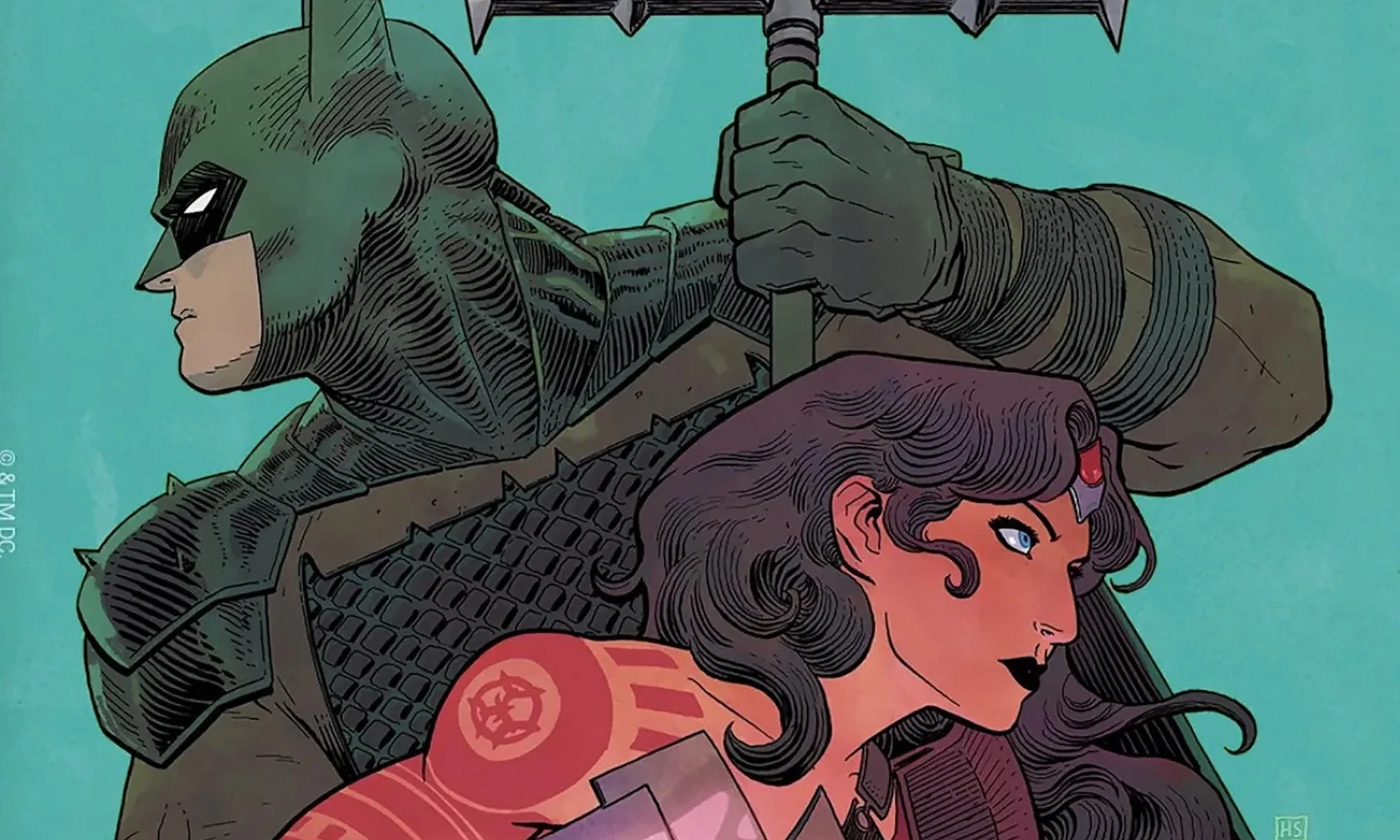
Imagine if Bruce Wayne had no money, if Superman grew up on Krypton and came to Earth with emotional scars, or if Wonder Woman had been raised in Hell. Welcome to the Absolute Universe – a dark parallel universe created by DC Comics in 2024. The idea of a parallel universe is not new to comic books, but what is surprising has been the success of the Absolute Universe. Some of the Absolute versions of superheroes have been outselling the comics that take place in DC’s mainline universe. I talk with Executive Editor Chris Conroy and Group Editor Katie Kubert about how they’ve overseen the team of artists and writers at DC crafting this dark universe with thematic parallels to our own world. And I talk with writer Kelly Thompson about how she came up with Absolute Wonder Woman and why the comic is resonating with so many fans. This episode is sponsored by Surfshark. Go to https://surfshark.com/worlds or use the code WORLDS at checkout to get 4 extra months of Surfshark VPNMUSIC LISTPlanetary Wonders by Patrick RundbladBreaker of Chains by Jon BjorkDark World by Braden DealKinetic by RevoLa Defaite by Gerald OlivieriAchievement by Philip AndersonCall of Fate by Alex BesssWake-Up by Hartzmann
Absolute Reimagining of DC Comics transcriptYou’re listening to Imaginary Worlds, a show about how we create them and why we suspend our disbelief, I’m Eric Molinsky.
Sometimes when I’m interviewed about my podcast, I’m asked whether I have a favorite fantasy world. Longtime listeners will not be surprised to hear my answer is Batman – although it’s more than just Batman. It’s the whole DC universe around him. Of course, I’m a fan of other fantasy worlds, but the DC Universe is my happy place. And for the past year and a half, my happy place has been miserable for some of the characters – but it’s been great for fans.
In October 2024, DC launched a line of comics that take place in a dark, parallel universe called the Absolute Universe. This parallel universe was created by one of the biggest villain in DC, a character called Darkseid. The superheroes we’re all familiar with do exist in this universe, but they turned out very differently.
In the Absolute Universe, Superman did not arrive on Earth as a baby. He arrived on Earth as a teenager. Now he’s a mysterious loner being hunted by a para-military corporation. Bruce Wayne is not rich, so Absolute Batman has to MacGyver his gadgets. Also his parents were not killed in an alleyway. His father was a school teacher who was killed by a mass shooter on a field trip.
Absolute Wonder Woman was not raised on Paradise Island; she was raised in the underworld – the land of the dead. Absolute Green Lantern and Absolute Flash are not Hal Jordan or Barry Allen. Those characters suffered a terrible fate and someone else had to take on the mantle.
The nice thing about a parallel universe is that the writers can do whatever they want because it doesn’t affect the regular versions of characters. Their comics are ongoing, as usual. But the Absolute comics have become so popular, many of the Absolute versions of the characters are outselling the regular versions of the characters.
And it’s not the first time DC has created a parallel universe. DC and Marvel have been doing that for years. So, what’s different? What are the Absolute comics tapping into where fans like me cannot get enough of them?
I talked with Chris Conroy and Katie Kubert. They are the editors at DC who are overseeing the team of writers and artists working in the Absolute comics. I asked Chris if there’s going to be an end point for this experiment in storytelling.
CHRIS: We have no endpoint in mind for the Absolute Universe. So, I can say that pretty confidently. You know, when you're in comics, you plan for every eventuality. You never really know like, hey, is this going to connect? We thought we had something here. But you never really know if you've met the audience at the moment when you need to. So obviously we had ideas of like, okay, if we had to only run this for two years or so, we could do this. But we never wanted to. We wanted these to be as long as possible. I mean, Jason Aaron, when he came onto Superman was like, I want to write this until you pull me off of it physically. He intends to go for a very, very long time. It's been an interesting experience just commercially with these books in terms of getting the number of copies out there. Right. You know, keeping up with the demand of these. We are constantly changing our business practices around these comics at this point in terms of keeping issues in print, normally a monthly comic comes out and it disappears within a month in favor of the next one. We've just gone back to press on the first 14 issues of Absolute Batman when there are only 17 issues. So they're all permanently available now in a way that has required sort of DC as a company to think differently. But creatively now the challenge is just, you know, keeping them moving, keeping them hot. You know, we had that long period of lead time to develop these and now we get out.
It all started with Batman or Scott Snyder. If his name sounds familiar, it’s because I interviewed Scott Snyder about writing Batman comics. It was one of my earliest episodes from 2015.
Scott and another writer came up with the idea of the Absolute Universe and pitched it to DC, knowing they’d have to assemble a team of writers and artists to take on the different characters.
Here’s Katie Kubert.
KATIE: Scott was able to look at the world as a whole and kind of how people feel within that, in that world, you how like each of us feels within the world now and apply that to how he would approach a Batman's stories if it was told today. And that's kind of been the mantra for how we approach the characters in general is if these characters had their origin stories in the modern time as opposed to the ‘30s or whenever they came about, how would that reflect on them and how would that affect their stories?
CHRIS: Yeah. And in the case of the Absolute specifically, we took over a year to look at the premises we had, kind of poke at them, ask questions about them, think about the things that we had seen in stories before that we loved and we didn't want to lose because that was a big part of our North Star too, was we know we're going to take a lot of things away from these characters, but what can we absolutely not ever take away from these characters?
KATIE: And one of the other things too that, that we took a lot of time at the start as editors, but that's really important, especially with the Absolute line is, is casting the writers themselves. Because a big part of it is making sure that you have someone who has the right voice, because then after that you're like, I trust this person. They have the path. They know the character, they know the story that they're doing, and they're making my job easy. So we really took a hard look at what voices we wanted to tell these stories and then listened to the pitches that the writers that we approached had, and we're like, okay, you get it. You know exactly what we're doing. And so that way there's not a whole lot of like ripping the road up or, or redoing things because I trust this person. I know they're telling the story that is perfect for the world that we're trying to build here. And I trust them to do that implicitly.
CHRIS: Yeah. Once we have the pitches, I would actually say the thing, the only places where we made big changes were in response to artists. The magic of these books has been the writers and the artists, and there are definitely times when things we thought about the character totally changed once we saw an artist draw them. Uh, in the case of Superman, sort of the way Rafa Sandoval drew that character with that sort of dust cape, that was an idea that Jason Aaron pitched as, I think he has a cape made of Krypton. It's sort of the dust of Krypton that he carries with him, which was sort of one of those things you hear as an editor and be like, that sounds amazing. I don't have any idea what that looks like <laugh>, uh, but Rafa Sandoval, there's that just iconic image of Superman walking towards you in the cornfield. And his face is a little shadowed because he is a little shy, but he has this sort of spectacular swoop of dust behind him that makes him look like an angel. And we kind of really recalibrated the way the character felt once we saw that image because it just crystallized it.
Yeah. One of the things I think is so interesting about the Absolute Universe, I think is it gets to the question of nature versus nurture. And this question that I think a lot of people wonder is do does my origin story define who I am? And if you change certain things about me, would I still be me? And I think those are some of the really interesting questions. And, and Superman I think is a great example. Could you talk a little bit about once you changed that iconic, you know, backstory of Superman, how is he still Superman and how is he not quite Superman?
CHRIS: Yeah. He has, as I mentioned, he's, he's a much shyer Superman because he's lost more. He doesn't have that confidence of sort of always feeling loved in the way that the main line Superman did, where he didn't remember Krypton, and he landed with the Kents who loved him unconditionally and loved him from the moment that he had them. The absolute Superman knew Krypton, loved Krypton and lost Krypton and was not ready to open his heart up in the same way. It took him years in the events of our story to get to the place where he's really making connections with other human beings. But in that way that I sort of talked about in the origins, we said, what can we never lose? He still has that total and unquenchable hunger to do the right thing to not hurt people, because those are the things he learned in his childhood on Krypton, and it's the culture that he brings to his new culture. It's the same for Diana. You know, we put Wonder Woman literally raised in hell by a character that people have traditionally seen as a villain, but we knew the one thing she would never lose is that feeling of total support for humanity, total forgiveness, wanting to practice grace. We didn't want to take these things out of these characters because you can change costumes, you can change hairstyles, you can change everything. But those are the things that for 85 years people have connected to about these characters.
AD BREAK
As I mentioned, Scott Snyder is writing Absolute Batman. He’s working with an artist named Nick Dragotta.
The world of Absolute Batman is so over the top -- whatever you’re imagining -- double that in scale, edginess, weirdness and violence.
But this version of Bruce Wayne isn’t brooding in his cave and then pretending to be a playboy billionaire. He’s a blue collar guy with a group of friends. In fact, his childhood buddies are the alter egos of some of his villains in the regular comics. But their friendship and sense of innocence gets shattered.
Katie says, when Scott pitched them his take on Absolute Batman, he said:
KATIE: How can I get people to relate to him and how can I get people to identify with him in a way that they didn't necessarily identify with him? Things like his parents or his, his mother still being alive, the way he loses his father, uh, with the school shooting or with the, with the shooting at the zoo. These are all things that were like, oh, people, people can connect and resonate with this maybe in a way that they weren't or hadn't yet with the, uh, core mainline Batman. So it was a lot of, uh, taking the layers of what makes Bruce Wayne and kind of peeling them away. So at the core, you still have the essential Dark Knight, but then what else can we put on top of him that makes him different? So how, how does he approach the same problems in a completely different way?
Or there’s also too the, the artist interpretation of him, he is physically gigantic. The bat symbol on his chest is like an ax blade.
KATIE: Yes.
Um, and I remember when the first moment that covered was that cover was teased, people went crazy for it. Like, what, what do you think that is tapping into?
CHRIS: The thing I remember from when Nick was doing the design sketches of Absolute Batman is, you know, he started by drawing Batman and he's colossal, he's seven feet tall, he's so muscular, he's covered in spikes, he looks so angry and rageful. And then the first sketch he turned in of Bruce Wayne, I went, aw! He was like, so cute and tender. Like all of that rage that you see in Batman was this sort of face with this very cute contemporary haircut. And I was just like, I want to protect him,
KATIE: <laughs>
CHRIS: Like, you don't think that way about regular Batman in the DC universe. He's got decades now of being awesome and aspirational and being a figure that you look up to as almost more than a person. But even how exaggerated Absolute Batman is that Bruce Wayne is, as Katie was saying, so relatable. That was the thing they zeroed in on. He is a young man. He is hurting, hurting in the ways that so many young men are. And as a result, all those awful, awful things Scott and Nick are putting him through in the series, you really, really feel it in a different way. Even if he's physically a tank, you know, emotionally, this is really hitting him.
Well, I want to ask you, there's a lot of like horror elements in the Absolute line, cosmic horror and body horror with Bane, Brainiac, Hal Jordan, who's become some kind of cosmic horror monster. Like what were some of the, did you guys ever be like, turn that up guys! Like, you know, like, like I, we want everyone, like, like was there ever any direction about this? Or did they all just kind of come back to you with the same artwork where you're like, oh, I think you guys are all tapping the same vein here?
KATIE: Uh, I think it comes like, again, at, at the core of, of what we're building, and you know how this is, it's a universe where Darkseid is at the center, so of course it's going to be a lot more anger and a lot more just meanness. And, and it's, it's a vein that has tapped, been tapped into in all the series because all, all the series at the core, this is the universe that is, is born of Darkseid as opposed to, you know, the DC universe.
CHRIS: Yeah. But Katie's also underselling her own influence here. She's a horror sicko.
KATIE: That's true.
CHIRS: She loves horror movies. She's always asking us to crank up the dial. There's always a more factor. <laugh>, you know, I mean like, as editors we're used to kind of being a little cautious around these characters and having the, oh, can we do that? But we sort of shook that off fairly quick in the Absolute line. We could see that like to do that would be holding back the tide, you know, this is, this is where the talent wanted to be. This is where the characters wanted to be. And it's also just an undercurrent of the way in which we made the books feel relevant in that that feeling of creeping horror all around is relatable. Many people feel they're living through a horror story in sort of the 21st century. And so playing with all of those anxieties that we know people are feeling and liberalizing them as almost horror fantasies compared to the power fantasy of a regular superhero comic is kind of a north star of the whole project.
KATIE: We also have to be, it's something that we're also hyper aware of because when, because we created this universe, we want to make sure there's different offerings for every person. So if you made it all samey, it might be alienating other people that are like, oh, I really am connecting with X, Y, Z character. But this all feels the same. And so that is kind of, uh, another thing that Chris and I and, and, the associates and assistant editor all try to do is to make sure these each have elements that make them feel like they're one universe while also telling stories within different genres, you know, action or, uh, sci-fi or, um, fantastical or, um, I don't even know what genre you could put Martian Manhunter in, because he kind of covers everything.
If you’re a casual fan of superheroes, you might not know who Martian Manhunter is.
In the regular DC universe, Martian Manhunter is a green humanoid alien who is deeply empathetic. He can read people’s minds and turn himself transparent. He’s also a refugee, the only survivor of a genocide committed by white Martians. And he can shapeshift. So to blend in with humanity, he pretends to be a cop named John Jones. That’s where the name manhunter comes from. It’s an old word for detective.
The writer Denis Camp and the artist Javier Rodriguez made a big change with Absolute Martian Manhunter. They split the alien from the human. In this world, John Jones is not a fake cover story. He was born human. He’s a detective who would’ve been blown up by a bomb, but the green Martian -- who looks kind of like a genie -- saves John by possessing his mind and body.
Now John is living a double consciousness. He can see people’s auras. He sees how a white Martian is manipulating people’s thoughts and turning them to darkness. So having this entity inside him makes him feel compassion for humanity as a whole, but it also makes John feel alienated from his family.
And the design of this comic is incredible. Every page looks like a psychedelic work of art. The colors are hypnotic and the drawings are surreal. Katie is really proud of how that comic is turning out.
KATIE: I love, like, so I love Martian Manhunter because I just, like, before the, the book, even the, before you even had the Absolute book, I'm like, I just, I love like how he's a little bit strange. I love how he finds like these little parts of humanity to really kind of like hook into and try to just, I don't know. I like, he's fantastic. So then when, uh, Denis sent the pitch in of how it takes the concept of a Martian and the connection that that DC Martian Manhunter has to John Jones, you know, and, and what he uses with his secret identity and how he splits that in the Absolute universe and, and how he approached it is something totally in your mind was really cool because I'm not, I run the gamut when it comes to more psychedelic comics. Like sometimes if they're too heady, it, it kind of loses me. But this was presented in a way, I, I guess because of, even before Javier's art was grounded, it's, it, it's weird to say psychedelic, but grounded. But that's how it felt because he's like, it's this Martian and he's in your head and you go through this traumatic experience, you know, John gets blown out of the coffee shop and all of a sudden you start hearing voices and you're talking to yourself. I'm like, that's easy. Totally understand that I've to, you know, aside from being blown out of a coffee shop, I talk to myself all the time. So it's things where you're like, I, I get it. I get this. And then having how the white Martians with like this like thought heavy stuff, like it's something where people can be like, oh, I'm having all these intrusive thoughts. Maybe it's a white Martian, you know it's, when he started working on Manhunter, it was just like, this is the perfect combination. This makes it real.
Yeah. And it's grounded too in the sense of his wife and his, you know, this, there's a, there's a marriage in the middle of this whole thing.
KATIE: So I told, I told Denis, uh, because Denis and Javier are both, both happily married men, I'm like, you guys are doing divorce comics so intensely it's giving me agita.
<laugh>.
KATIE: So I'm like very, very proud of you because yes, it, there are parts of it that are so depressing, but that's what makes it good. Because it makes you feel something. Right. And that's why we're, that's why we're reading this in the first place.
Another one of their breakout hits is Absolute Wonder Woman.
Kelly Thompson is the writer of those comics. The main artist she works with is Hayden Sherman. And some of the issues are illustrated by Mattia de Iulis and Matias Bergara. You’ll hear her refer to all three of them in our conversation.
Kelly has been pleasantly surprised by the success of Absolute Wonder Woman because she almost gave up. After she got the assignment, she looked through older Wonder Woman comics to see how other writers approached this character. But after a while, she began to feel overwhelmed and hopeless. She was about to call in and say, I’m sorry, I can’t figure this out. Then while she was brainstorming:
KELLY: I wrote the words raised in hell and I was like, oh. I was like, and if you're raised in hell, who's raising you? It should be an enemy. And then I was like, oh my God, it's Circe. I was like, and if it's Circe, then she's a witch. I was like, wait, witch Wonder Woman in hell raised by Circe? I can write a thousand issues with that. I know exactly what that looks like. And it just opened up. It was beautiful. It was the best creative moment of my career probably.
If you’re wondering, is she talking Circe from The Odyssey – the witch that turned Odysseus’ crew into pigs? Yes. Many of Wonder Woman’s longtime enemies and allies come from Greek mythology.
But to turn Wonder Woman into a sorceress or a witch may seem like a weird choice. But not only does it work in some ways, Absolute Wonder Woman makes more sense than the canonical version of the character.
AD BREAK
At this point, I’m going to give away spoilers in case you want to read the comics without knowing anything.
Traditionally, Diana’s origin story begins on Themyscira, an island of Amazon warriors. An American soldier named Steve Trevor accidentally ends up on the island. Diana escorts him back to man’s world and she becomes Wonder Woman.
Absolute Wonder Woman begins in a similar way, but this time Steve Trevor ends up in the underworld. It’s not as easy for Diana to escort him to the surface. Hades, the god of the underworld, requires a sacrifice. So, Diana cuts off her right arm. But she’s able to craft a prosthetic arm through magic, although there are times where she has to remove it.
In her first storyline, Diana saves Gateway City – which is similar to San Francisco – from a giant monster called The Tetracide. She uses magic to summon an equally gigantic sword, and she turns herself into Medusa -- temporarily.
I asked Kelly if she thought about the idea of nature versus nurture with this version of Diana because she looks badass flying out of hell on a skeleton of Pegasus, with her tattoos, red, black and silver armor, but she’s still good to the core.
KELLY: I talk about nature versus nurture a lot, but I never really come down on, I don't think it is one or the other. I think it's a little bit of both as usual with these things. And I think that belief that it's a little bit of both is very evident in Absolute Wonder Woman, because what Circe creates now is going to be completely redefined by the experience of raising Diana. Like that they will influence one another in almost like a feedback loop that in this case, ends up very powerful and very positive. And what could have been a tragedy ends up being a triumph. But again, that comes down to the nature of Diana. Without the nature of Diana changing Circe, does the nurturing workout as well, right? So it's like, it's sort of like a snake that eats itself, like it's all connected. Staying with that, I think that was what led me to, I can't do this, was every idea I had come up with felt to me like either we'd seen it before, which is a big problem in comics that we all struggle with, um, or <laugh>. It didn't feel like her anymore. I took away too many things and I'm like, that's not Diana. That's just some warrior, or that's not Diana, that's just some God empowered new character. And I wasn't interested in that. I really wanted to find Diana. And so every time I came up with like a sort of God of War Diana or something, <laugh>, I felt like either we'd seen it before or it was a real betrayal of what I actually really wanted to do and believed was important, especially with the darkness of the Absolute universe and the darkness of our own world and what, you know, we were all talking about as creators about what could and should be done, uh, within that narrative.
In the mainline comics, Diana is considered a warrior for peace. Many writers have explored that contradiction. Kelly says Absolute Diana is a warrior for justice.
KELLY: There's no peace without justice. And she lives in a world that is short on justice, as do we, by the way. But I don't know that that's so much a difference between the characters and the difference between the world and what they're being afforded. I think because of the way Diana comes to this world, both man's world and to hell when she's born, she knows there's no justice. She's, she's been, she too has had a boot on her neck in a different way since birth. It's just a credit to her, and those who rise up around her either inspired by her or inspired by their own need for justice, that she becomes this incredibly honed weapon that is going to be a problem for everyone now. Because you thought you were holding someone down, but all you were doing was making them so strong that they'll have the skills maybe to, to really bring justice about.
Were there ever any specific moments where your writing and you felt very comfortable, like, this is a choice Diana, um, you know, on a mission of justice would make that Diana on a mission of peace wouldn't make, but I'm okay with it. It's still very much feels like Diana,
KELLY: A lot of the choices she's made. I mean, listen, she, she put a giant building size sword through the Tetracide. Like she obviously is willing to kill a creature after it won't agree to leave. So she's not opposed to killing, I don't think she's opposed to killing humans either, depending on the scenario. She has a ton of power. She's using it really aggressively right now, and that will blow back on her as well. It has to, it has to have consequences. You don't just to get to go out and do all the good things in the world, especially in Darkseid’s universe, and it just be fine. So there's a lot coming for her.
Well, you mentioned consequences and I think that is also what's so great for me about witch Diana, and you know, this is, you know, well, many, many worlds where magic, there's a cost to magic, there's a price to magic, and that's in a lot of magic systems. And that, for Diana specifically, that opens up so many interesting story possibilities.
KELLY: I was very cognizant of wanting to show the cost of magic because it is big, but I mean literally that's why we did what we did with her arm. Like getting Steve out of hell has to be something big. It can't just be, and it has to cost Diana specifically personally. Like it has to be significant. But I think the creativity of the magic is one of the things that's most interesting for me because it gives her a lot of elasticity with how to solve problems. You know, we had done so much pre-work and so much character work and so much, you know, figuring out this world building for the book that the two big moments that aren't her arm in the first arc, her making the sword building size and cutting into the Tetracide and then becoming Medusa, those weren't in the original outlines for those issues that they were not in the plan. When Hayden drew that, um, Tetracide thing, I was like, well, I don't even think we can do how I was thinking solving this because we have to go bigger than this now, which was a great, like in the moment you panic because you're like, well shoot, now I got to figure that out. But it's an incredible gift because now you've been pushed to do something bigger and better and smarter and more creative. And I don't think you can abuse it because if you're just using it to get out of everything and there's no never any cost and you can just do anything, it feels like a, uh, a deus ex machina, right? Like, and you don't want that, so you have to anchor it. But so long as you're anchoring it, there are just endless creative solutions for someone like her. And it's been really fun.
Another change that Kelly made is that Absolute Diana doesn’t have a golden lasso of truth. She has a series of lassos with different powers like the Nemesis Lasso, which burns someone in proportion to their sins, or the Sacrifice Lasso, which transforms somebody. She uses that lasso on herself to become Medusa.
KELLY: The biggest problem for me was A, we didn't want to replace the lasso of truth. Like in my, my lore, it's out there somewhere where, how it comes from. Maybe she can't get it because it's in Themyscira. Maybe Circe has it stored away for some reason somehow, like maybe it's going to appear to her as a gift from a God at some point. Like I think it should be out there as a thing for her, uh, and as a transformative thing. But I was more interested in this idea of her and her mother building these las together because they're just down there. What are they doing? She's going to be a great warrior. They're just doing preparation. They're building armor, they're building weapons, they're building spells, they're creating new spells. They're, they're doing all this stuff to make her this arsenal. So I tried to make sure that everything we built for the lassos really made sense. Like what are the kind of lassos they would build? I think the sacrifice lasso is particularly interesting because that's a very Circe based kind of a thing. I loved that we were able to get into an issue where you get the flashback with her mom and you see that Diana's not entirely comfortable with that lasso like it, she helped build it, but it's not sort of the way she sees the world. It's more the way Circe sees the world.
Most of the Absolute characters are in their own storylines. The first crossover happened between Absolute Wonder Woman and Absolute Batman.
KELLY: When it came time for the crossover <laugh>, I very greedily reached for it, partially for me and my team, but a lot of it just for Diana, it just felt like she'd earned it. It felt like she'd earned the chance to go to Gotham and be the first one. And I think everyone pretty much agreed. And so <laugh>, we ended up being the first crossover. And there's a lot of pressure when you're going to put Batman in your book. I felt a ton of pressure to get it right. And then because we were going first, first, like even before Scott's issue, I felt like we had to do a lot of explaining and a lot. So like, it ended up a lot more, a lot heavier in the text than ideal.
Yeah, I'm realizing too, and you're like, you realize how hard it is if, if even if Batman shows up, you know, if Batman just shows up in Gateway City, she says, what, what are you? And he just says, I'm Batman, you know, but she shows up in Gotham, he's like, what are you, okay, so magic exists and uh, <laugh> you're just like, how much time do you have <laugh>?
KELLY: Yeah, yeah. It's a little tricky. <laugh>. Yeah. I think also, you know, a different a main reality Bruce who's an older, more experienced guy who's also more of a detective guy, probably does know more about her, but this is a younger, ballsier Bruce who's been very busy and so maybe he is not aware as aware of her. And so that, that changed the dynamics of like what we had to do a little bit.
Batman is the best-selling character in DC comics. There’s usually a big gap in sales between standalone issues of Batman and Wonder Woman. Absolute Wonder Woman has narrowed that gap tremendously. But Kelly says the fans were a bit skeptical at first.
KELLY: A lot of the talk, especially early, was about her design, which I think rightly so, when we designed that costume for her, mostly Hayden of course we knew we were doing a bunch of things that historically wonder woman fans hate no gold on the costume pants. Not a lasso visible, a giant sword. They traditionally hate Diana with a sword. I also don't like Diana with a sword, by the way. It doesn't make a lot of sense unless you need a giant building sized sword because you're fighting building sized creatures and then maybe you need a sword. But like, yeah, I mean, there were people who thought it was going to be too hardcore and they weren't going to like the story and they've really turned around on that. Even people who were like felt it was the design, oh, this is going to be too edgy. I don't like edgy, mean, Diana, they couldn't really deny that the look was really thought through. It was very hard not to want to spoil that for people. Like, because you know, there was a lot of talk about the tattoos, like why would she have these sort of tribal looking tattoos and everything? And you know, you're just sitting on your hands going, just wait till she's three. Just wait till she please. I hope you guys will just read till issue three. So you can see like, this is all really thought out. There were no decisions that were made just like arbitrarily on a whim, like oh, give her a tattoo, like that's just, it wasn't the process. And one of the things I hear a lot is that the magic is a great way. It's the first time she's felt super distinct from Superman, like that there's too much overlap of them in the prime. Like now he feels much more science fiction because a lot of the cool stuff Jason is doing. And while as Diana has pushed more toward fantasy stuff, right, and witchcraft, and those are good distinctions for all of them and for the line. So compassion, radical compassion, love being transformative, those are things that people recognize in any Diana. And so it's what they still love about her now.
And as you're saying too, it really speaks to our moment. A lot of people are feeling kind of hopeless right now and just sort of overwhelmed with darkness and it's kind of, it's inspiring to, you know, to see this, this character who's been around for many, many years to suddenly feel so fresh and relevant right now.
KELLY: I totally agree. I think, I think that that's one of the only problems that I'm worrying about right now is that our book has been, I wouldn't call it the lighter of the books. I mean there was this hilarious meme going around during the, the maze arc for Diana that was like a Brooklyn Nine-Nine meme where they were like all fighting in the background and the meme was like Batman and Superman getting destroyed. And then it's the assistant in the front like smiling and doing a selfie and they're like, Diana having adventures in a maze. And I was like, it's a hilarious meme, I love it. But also this bitch cut her arm off before she even met you guys and she defeated a building size monster in the first arc. So let's get, yes, she may be trapped in a maze right now, but like she's, she's sees some shit. So I think, um, I worry, our book has felt lighter not because of the things she's facing aren't dark, but just because of the way she approaches them. There's just like a lightness and a goodness to her that just like really comes across. I some of it is in how Hayden draws her, those eyes. Like even when she's mad, those eyes still look like they understand you. I don't know what it is, it's magical. But I will say that, um, Mattia De Iulis and, and Matias Bergara they really captured it very well too. This this thing with her face where even when she looks intense, there's just this real compassion there. And I worry about that as we go because I do think people are sort of, especially because the world is so dark right now, they are clinging to, to our book being a bit lighter. But like, you know, as I was saying, things have consequences and things are dialing up for her. So I don't know, I worry about that balance a little bit. I don't want to push us too dark, especially right now, but I also think we got to see both sides of the coin fully for it to really feel earned.
Yeah, well that's the thing I think I like about it, is that the lightness feels earned. That's, that's how I feel is and, and, uh, and that's a hard thing to pull off, you know?
KELLY: I, I really just credit Diana <laugh> <laugh>. It sounds a little insane. It sounds a little insane to say it that way, but she really is like a guiding light. Like, she's like, she's like, who I wish I could be. Like, it's very aspirational to write her. Like, you can just, you can just let her do it for you a little bit where she's like, I wouldn't do that. And you're like, fuck, I need a new solution then. <laughs>
One of the things I like about comic books is that they are endlessly renewable. With other franchises or media properties if you don’t like the way a story turned out, too bad. It’s now canon. But with comics, if you don’t like a storyline or the way a character is depicted – you don’t have to wait long or look far to see another version. And there’s a history of writers taking over a character and changing whatever the previous writer did if they didn’t like it.
The downside is that the characters might feel like they’re stuck in a loop. And some of the fans can be very resistant to change.
So, when a writer comes up with something new for a character that’s been around for decades and everyone agrees, this is a great idea, let’s keep it, those are moments to celebrate.
The Absolute Comics are a series of great ideas. And once a great idea is out in the world, there’s no limit to how far it can fly.
That’s it for this week. Thank you for listening. Special thanks to Chris Conroy, Katie Kubert and Kelly Thompson. My assistant producer is Stephanie Billman.
If you liked this episode, you should check out my 2015 episode with Scott Snyder called Being Batman, For Now. Also in 2016, I did an episode called Imagining Wonder Woman about the history of the character going back to the 1940s.
We have another show called Between Imaginary Worlds. It’s a more casual chat show that is only available to listeners who pledge on Patreon. In the most recent episode, I talked with journalist Yi-Ling Liu about the challenge of being a science fiction writer in China today.
Between Imaginary Worlds comes included with the ad-free version of the show that you can get on Patreon. You can also buy an ad-free subscription on Apple Podcasts.
If you donate to the show on Patreon, at different levels you also get either free Imaginary Worlds stickers, a mug, or a t-shirt, and a link to a Dropbox account, which has the full-length interviews of every guest in every episode. Our merchandise is also available to buy at our TeePublic store.
You can subscribe to the show’s newsletter at imaginary worlds podcast dot org.