
Is Mythology the Key to Understand AI?
Episode 312
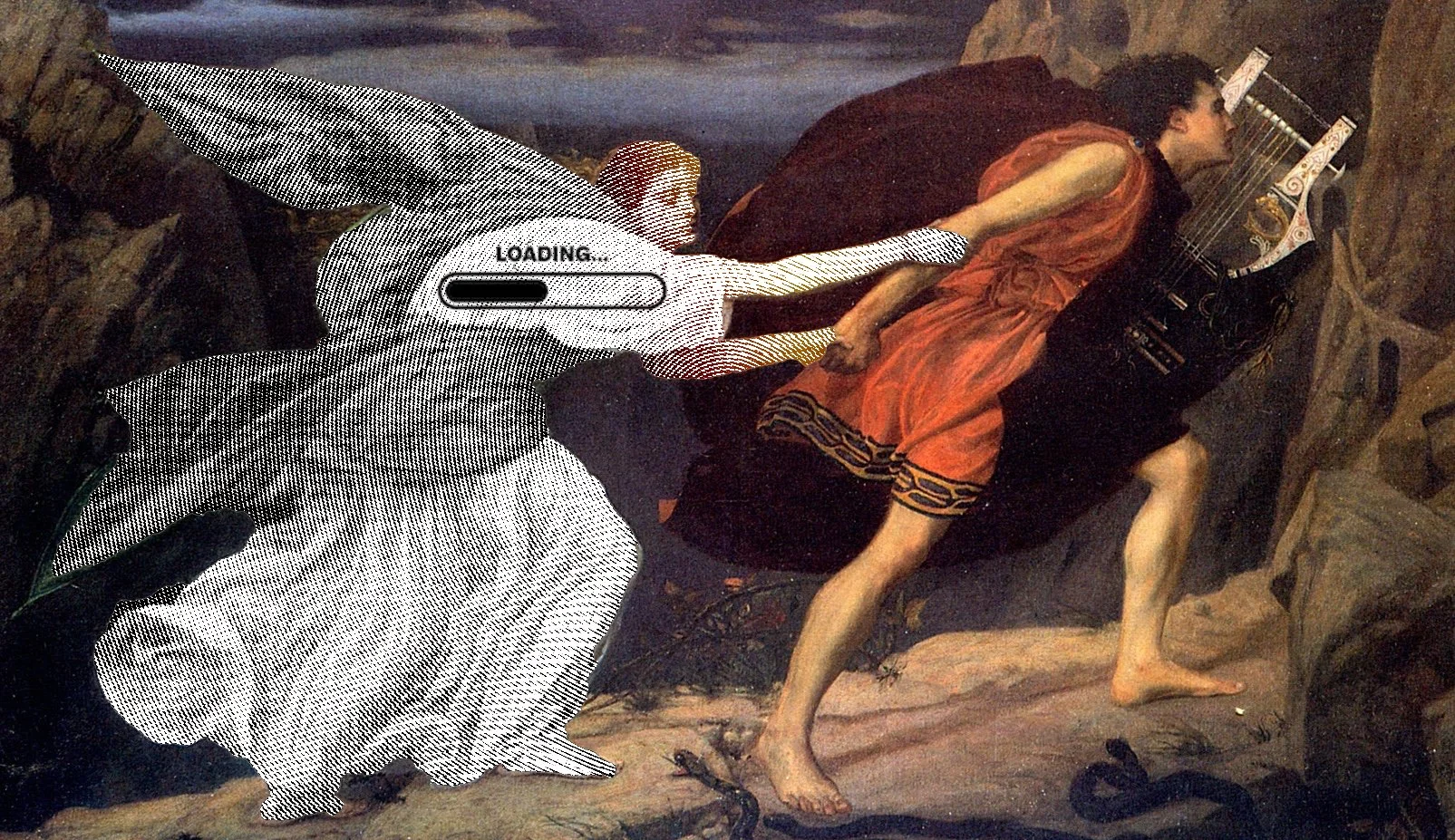
With all the talk about rogue AI potentially ending civilization, it’s hard not to think of The Matrix. When there are stories about people falling in love with ChatGPT, it’s hard not to think of movies like Her. But it’s possible that science fiction isn’t the best prism to understand AI right now – even if it feels like we’re living in a sci-fi story. Some experts are using ancient mythology instead. I talk with Berkeley researcher and author Nina Beguš, journalist and author Vanessa Chang, and Truman State University professors Amy Norgard and Josh Nudell how myths like Pygmalion or Pandora reflect primal human desires and fears that have an effect on the development of AI. I also talk with audio journalist Rebecca Nolan about her experience trying to bring her father back from the underworld as a chatbot.This episode is sponsored by Monarch. Use the code IMAGINARY at Monarch.com to get your first year of Monarch Core half off at just $50MUSIC LISTParticle Emission by Silver MapleTunnel by Danijel ZamboUnfinished Stories by Lennon HuttonOminous Ambience by John AhlinCloser Than We Think by Sanctus
Transcript of Is Mythology the Key to Understand AI? You’re listening to Imaginary Worlds, a show about how we create them and why we suspend our disbelief. I’m Eric Molinsky.
In the 2013 film, Her, Joaquin Phoenix played a lonely guy who fell in love with an AI, voiced by Scarlett Johansson.
SAMANTHA: So how can I help you?
THEODORE: Oh, it is just more that everything just feels disorganized. That's All.
SAMANTHA: You mind if I look through your hard drive?
THEODORE: Okay.
SAMANTHA: Okay. Let's start with your emails. You have several thousand emails regarding LA Weekly, but it looks like you haven't worked there in many years.
THEODORE: Oh yeah. I, I, I think I was just saving those because I thought maybe I wrote something funny in some of them, but
SAMANTHA: <laugh>, yeah, there are some funny ones. I'd say there are about 86 that we should save. We can delete the rest.
It’s kind of eerie how well that film predicted Large Language Models or LLMs. I mean, ChatGPT isn’t at the level of the AI in the film which is depicted as a sentient being. But the voices of LLMs are sounding more and more natural. I’ve read news stories about people who claim that they’re in love with and they’re in relationships with ChatGPT. And on a more subtle level, I know people who treat Claude or ChatGPT like it’s a life coach or a therapist.
There are disagreements among computer scientists as to whether LLMs are sentient or evolving in that direction. I come down on the side that they are not. So I started looking for sci-fi stories that could reflect my perspective. And as I went through all the movies, shows, novels and video games I could think of, I realized the vast majority of them depict AI characters as sentient beings. We are supposed to empathize with them -- like Data on Star Trek – or we fear them like Skynet in The Terminator. Then there are movies like Ex Machina, which play with both of those ideas.
Now, I don’t have a problem with that. I love a lot of those stories. I’ve done episodes about how they can be used as metaphors really effectively. What bothered me was that it was so hard to find stories where AI was depicted as an illusion designed to fool us.
After a while I realized that I’m looking in the wrong time period. I need to go further back – like much further back to the ancient world. That’s where I found stories that can reflect and illuminate what’s going on right now. Amy Norgard is a professor of classics at Truman State University.
AMY: The ancient texts, I feel, have this uncanny ability to capture humanity, and they do it very well. I think sci-fi, it likes to focus on the technologies, the advancements, what humanity could be, not necessarily what humanity is. And in some ways, uh, the stories from myth, they, they can really cut through and just really talk about what are humans like and what are human tendencies.
Amy and her colleague Josh Nudell have written about the parallels between Large Language Models and the myth of Pygmalion.
The story appears in the anthology Metamorphoses by the Roman poet Ovid or Ah-ved, depending on how you pronounce it.
The story is about a sculptor named Pygmalion. He creates a statue of a woman and falls in love with it. The gods turned the statue into a human, and she became Pygmalion’s wife and mother of his child. Ovid does not give the statue a name, but later authors call her Galatea.
One thing that Amy and Josh found interesting is that when the story begins, Pygmalion is not depicted as a lonely, dreamy artist. He’s very judgey. thinks the women in town have loose morals. So, he’s going to sculpt a woman who represents his idea of purity.
JOSH: And then, that purity manifests in the way Ovid, uh, uses language to really highlight the, the whiteness, the purity, the sort of beauty of this, this, this statue that is like to his girlfriend. It's not actually real. And that realness is something that then is, is validated by the, the gods, particularly by Aphrodite.
AMY: There's, uh, one line where he talks about, um, how the statue has a quote unquote manmade body or artificial body. Uh, the word in Latin, the words in Latin are simul, uh, simul here being kind of our key word. We get our English word simulation from this. And so one could translate this as simulated body. You know, this is in a scene where Pygmalion is bestowing the statue with affection. He's kissing it, he's giving it gifts. He's treating it like a real girl. Avid, though, kind of very cleverly reminds us that the statue is in fact a statue, and it's artificial.
Nina Beguš is a researcher at UC Berkeley who studies AI. She talked about the connection between AI and Pygmalion in her book, Artificial Humanities.
NINA: And what I think is especially interesting about the Pygmalion story is that, Metamorphosis, right, where, where the story appears are full of love stories that that end up in blood, death, tragedy. You know, he's probably the only lover in the whole collection that isn't punished. And his story is basically told by Orpheus who has lost Euridice, lost her twice, and turned away from women entirely. And then you have Pygmalion who does the same thing, turns away from real women entirely, and creates an ideal woman for himself.
What surprised Nina in her research is that this story is not unique to Western mythology. She found other variations of Pygmalion across the ancient world.
NINA: I looked at the Silk Road and traced a folk tale, you know, that came from Sanskrit folk tales all the way to China that had a very Pygmalion-esque motive. Then I looked at Northern African folk tale, Native American mythology. Everywhere I looked, there was the Pygmalion myth. The myth is present. It's so sort of archetypal.
I think probably the most famous modern adaptation is the play Pygmalion by George Bernard Shaw. It’s about a professor named Henry Higgins who transforms a working-class woman named Eliza Doolittle into an upper-class lady. If that sounds very familiar, it’s because the play was adapted into the musical My Fair Lady.
Of course, this is a loose adaptation. In the original myth, Galatea is a statue. Her humanity is a fantasy in the mind of Pygmalion, until the gods intervene. In the play, Eliza Doolittle is a real person. She’s dehumanized by the class system that she lives in. But there is a surprising connection between the play Pygmalion and the development of AI.
In the early ‘50s, Alan Turing -- the father of computer science -- proposed The Imitation Game, although some people call it The Turing Test. And people did this for years as a real experiment. Human judges exchanged written messages with a computer and with a person they couldn’t see. The Turing Test was supposed to measure when AI could get sophisticated enough to pass as human and fool the judges.
NINA: And we know that, um, Turing loved Shaw's play and the whole idea of the Turing Test was already tried in this play where we have Eliza Doolittle, who's a cocky speaking flower girl, that a scientist, a linguist, wants to turn into a duchess purely through the transformation of her speech. And there's so many other undertones in the way we're instilling language into machines. And she basically plays the imitation game that Turing introduces a couple decades, decades later. And The Imitation Game is, of course, she needs to pass as the upper-class English lady among that milieu.
And Turing was not the only computer scientist who was inspired by Pygmalion.
In the mid ‘60s, an MIT professor named Joseph Weizenbaum created the first chatbot. He called it Eliza, after Eliza Doolittle. It was a text-based program that was supposed to interact with people like a therapist. And it worked so well, when his secretary tried the program, she asked Weizenbaum to leave the room so she and Eliza could have privacy.
NINA: He built this not thinking that people would take it seriously. You know, it was just an exercise in natural language programming and basically, Weizenbaum spent the rest of his career arguing against seeing AI as human.
WEISENBAUM: It, uh, it certainly creates the illusion of understanding. There's no question about that, but it, but, uh, but we have to understand, uh, that that illusion is an attribution that the person conversing with the program, uh, contributes, uh, to the conversation. It's, it's not, it's not a function of the, of the program itself.
NINA: But it was all in vain because we learned right then, but also in the studies that followed that what we call now the Eliza effect, this strong humanizing tendency towards machines is here to stay. And this is why I think the Pygmalion myth has become so big in today's technology and it's so easy to dismiss. I think that's a big problem actually, the dismissal of these very human desires that we apparently hold, and we want to see ourselves as this pillar of rational intelligence. But we're so much more than that.
Back in the ‘60s, if a test subject was interacting with Eliza, they would have to go into a lab at MIT and log into a computer terminal. That experience would not resemble anything else in their daily lives. But that’s not true anymore. The Eliza effect is so much more powerful now because the whole world has turned into Eliza’s playing field.
BREAK
Vanessa Chang is an author and journalist who has also written about AI and the Pygmalion myth. She says there are sci-fi stories that present AI as an illusion, but most of them are variations of Pygmalion.
One of the earliest stories is from 1816. It’s called The Sandman by E.T.A. Hoffmann. And this version of Galatea is not a statue. She’s an automaton that a man falls in love with.
VANESSA: And this story in particular then becomes the first place that the, the psychologists and Ernst Jentsch and uh, and Freud start to use to explain the concept of the uncanny.
And she told me about a short story from 1935 called Pygmalion’s Spectacles by Stanley Weinbaum
VANESSA: And it's the first story to really render VR goggles as we know it today. So, when you put on these, or when the person in the story puts on these spectacles, as he enters this, this reality, he comes to this beautiful woman, this figure who's this incredibly alluring character that kind of tempts him to stay in this world, and the world that he's lives in every day becomes this kind of shadow world that's so much less appealing than the one he's looking at through these spectacles.
Josh Nudell and Amy Norgard have also written about variations of Pygmalion in sci-fi. One of their favorite examples is an episode of The Twilight Zone called The Lonely. It’s about a prisoner spending solitary confinement on an asteroid planet. He gets a regular delivery of supplies, and one day they give him a robot who looks like a woman.
CORRY: I'm sick at being mocked by the memory of women. And that's all you are. You're a reminder to me that I'm so lonely I'm about to lose my mind.
ALICIA: <crying> I can feel loneliness too.
CORRY: I’m sorry, Alicia.
AMY: The main character's name is James Corry. Corry is initially resistant to accepting Alicia as real. He understands that she's fake. Then he very slowly begins to humanize her, and pretty soon there's like a flash forward. And he says, there are simply times. I do know that Alicia is simply an extension of myself. He really becomes more of a cipher for Narcisus, another character from mythology, uh, who is known for falling in love with his own reflection.
A few people that I talked with mentioned the myth of Narcissus -- including Vanessa Chang. Although she says there’s an important distinction to make with LLMs.
VANESSA: There's this gigantic corpus of language that LLMs work with. And the myth of Narcissus is interesting because it's a direct reflection of you. But that reflection gains a kind of depth because it's filtered through that massive corpus of language that it feels like it's drawing on something that's deeper than your own reflection
That is in the Twilight Zone episode. Alicia reflects Corry just enough while also seeming to have a mind of her own. By the way, if you don’t want to hear a spoiler as to how that episode ended, you can skip ahead 30 seconds.
AMY: By the end of the episode, there's this discussion about whether Corry should bring Alicia with him, uh, to leave his solitary confinement. He wants to take Alicia with him because he is bonded with Alicia. The person who's trying to get him to leave takes out a gun and shoots Alicia's face off. The very kind of final scene of the episode is Alicia laying there on the ground. Her, her humanoid face is removed and all you see are the circuitries. Um, and it's a reminder that yes, she was actually artificial this whole time. It kind of, in a way, sort of undercuts, you know, the humanity of the android and brings us back to reality that in fact, Alicia was, was fake all along.
Another example Amy likes is the movie Lars and the Real Girl. Ryan Gosling plays a socially awkward guy who believes that a sex doll is his real girlfriend and he hears her voice in his head.
LARS: She’s shy. Well, you are?! Everything’s so new for her.
AMY: So, Lars from Lars and the real girl is a great Pygmalion. Lars is more of a awkward guy who doesn't know how to talk to women. And the doll soon becomes a way for him to practice the skills of socializing. Whereas the Pygmalion story kind of starts more from a toxic place of, I don't think real women are good enough, so I'm going to make my own ideal woman. So I think Lars and the Real Girl, it really encapsulates this idea that, that we're seeing with AI now of, well, it's not that maybe real people aren't good enough for me, but it's just that maybe I'm more comfortable talking to an artificial companion.
JOSH: Right, I think the other side of the coin, the other one that I would bring up here is the Stepford Wives. These are people who already have relationships, but then decide, well, it's not, it's not doing it the way that I want, or it's not fulfilling my every desire, so I'm going to replace them with a simulacrum that does,
STEPFORD WIFE: I’ll just die if I don’t get this recipe.
JOSH: You know, and you can, I think that you can, there are ways that you can see from the same trajectory, from these same traditions. And something like the Stepford wives trims out one version of it, and Lars and the Real Girl trims out another version of it. And one of the great things about mythology that you can use it for is that the mythology puts both of them together and then requires you to actually engage with that interpretation.
Now some of you at this point might be thinking, look, I would never treat AI as a friend, let alone a romantic partner. If somebody does, that’s not my problem. I’m a little more concerned that AI could end civilization! And that’s been in the news right now. People are debating if there should be limits on the development of AI before it’s too late. That conversation has affected politics and the stock market.
The obvious science fiction analogy here would be The Matrix or The Terminator. But again, I think mythology might be a better prism to look through. Although in the case of rogue AI, Josh says, he wouldn’t choose the myth of Pygmalion.
JOSH: The woman who becomes Galatea in, in, in the myth mythology has no agency. She is simply there to serve Pygmalion, you know, sort of needs and desires in, in a lot of ways. But we all, we have these other stories about mythological examples of constructed women. Uh, the most famous being Pandora from Hesiod’s Works and Days.
Like Galatea, Pandora starts out as a sculpture who is supposed to embody wonderful ideals. She’s turned into a human by the gods. But Pandora’s claim to fame is opening that pesky box which unleashes all the evils on the world – although in the original myth it was actually a jar, not a box.
JOSH: One of the interesting things in, in this one and where she might actually fit these questions about agency even more strongly is that, you know, she's created by the gods, she's created by Hephaistos out of clay. She's given to, to Epimetheus, um, who's told not to, to accept her, but he does anyway because he can't help himself because she's, you know, created with all of the gifts that the gods have given her. But she's also created with the sort of mandate, don't open the jar, and you could raise this question in that we see in these speculative fictions, should we be blaming the constructed woman? Should we be blaming the AI? And I think that there's a straightforward reading of Hesiod’s Works and Days where it says 100%. She unleashed all of these evils upon the world. But then there's another reading of it that you could sort of go with, which is that she was created for this purpose by the gods, and she is simply doing the way what she was created for.
That idea of faulty logic or contradictory messages in a program brings us to another myth: King Midas.
Midas wished for a magical power that would turn everything he touched into gold. Then he realized that meant he couldn’t eat anything because his food was turned into gold. Then he accidentally turned his daughter into gold.
AI researchers talk about this myth and call it the King Midas problem. What they mean is a program may be very good at achieving its goal – perhaps too good because it doesn’t have the context to understand the unintended consequences of what it’s doing.
Nina says some computer scientists have been trying to solve this problem by turning to science fiction. In his book I, Robot, Isaac Asimov imagined these Three Laws of Robots that were designed to prevent robots from harming people.
NINA: These are fictional laws created on a technology that is not like the technology we have -- on an imaginary technology. And yet we still use them to evaluate the actual technology.
So, she and her colleague proposed an updated version of Asimov’s Laws of Robotics. They want researchers to focus more on exploring what AI could do if it wasn’t being molded in the image of a human.
NINA: But that is so hard to do. And I've seen engineers try to do it. I've seen writers try to do it. I've seen a lot of people trying to break out of this mold. It's so hard to do that. We presented these three laws as a sort of guidance on how to break out of it.
I, you know, I also am having trouble imagining, because I think that I'm also limited by my own human imagination. You know, I did an episode once where I talked to, um, astrobiologists about what aliens could look like, and it's just, they, they were saying it's so hard not even just to not think about animals on Earth. It's so hard to sort of just keep stretching your imagination. If AI followed your rules, um, and we've circumvented this Pygmalion problem, what would it look like? Or what would it do that I, that, that I'm having trouble imagining?
NINA: What was really, really surprising I mean, that's, that's the part of the research process, right? You need to explore and sort of see what machines can actually do, because we have sort of turned engineering on its head. Before, when you engineer the machine, you wrote the program and the machine followed, right? The human pushes a button, pulls the lever, and the machine delivers what the human basically created. But now this is not the case anymore. You know, especially in the medical community, there's always been a long process of ethical and social examination for whatever new technology came out. And now with the digital technologies, there's just none. But it doesn’t have to be this way, that’s my message.
If the industry would listen – to paraphrase Eliza Doolittle – that would be loverly.
BREAK
One of my favorite depictions of AI in sci-fi is from a 2013 episode of Black Mirror called Be Right Back. The story is about a woman mourning the loss of her boyfriend. Then she discovers a company can recreate him as a chatbot. She talks to him in her earbuds as she goes on a walk.
MARTHA: You told me this was a famous lover’s leap, doomed couples jumping to their deaths in Victorian times. I think you just wanted me to cling to you.
ASHBOT: Actually, everyone who’s ever jumped here did it alone. Nice.
MARTHA: Did you just look that up?
ASHBOT: Sort of. Should I have?
MARTHA: It’s a bit weird.
ASHBOT: Sorry. I only do it again if you ask.
MARTHA: No, no, no it’s fine.
The chatbot eventually gets upgraded to a realistic robot of her deceased boyfriend, which makes it even harder for her to figure out what’s real.
We’re far from creating realistic robots but we do now have the technology to create chatbots based on the voices of the dead.
Rebecca Nolan is an audio journalist who created a chatbot of her father after he died. She turned her experience into an audio documentary called Digital Ghost, and I saw her do a live performance of it at a podcast festival two years ago.
REBECCA: You have to go to the land of the dead.
DAD: And myth of the descent to the underworld is a very, very important one from that psychological perspective
REBECCA: My dad loved Geek mythology and fairy tales, all storytelling really, it was a really big part of our relationship.
I asked Rebecca whether she had a breaking point when she realized that creating a chatbot of her Dad was a mistake. She told me she knew it was a bad idea from the start -- she just chose to ignore her gut instincts.
REBECCA: And the reason that I knew that I shouldn't do that is because I have this base of mythology as kind of like my background. I come from a folklore background, that's what I studied. And I grew up listening to a lot of Greek myths and legends and fairytales from my dad. And there is a very clear warning about what happens when we try to mess with the balance between life and death. It never works out. The thing you get back is either incomplete or broken or it just leads to heartbreak.
Yeah. Did anyone ever come up to you afterwards of the show or hear the radio documentary and have takeaways that you're like, oh, that actually is not what I meant?
REBECCA: Yeah, I got a message I want to say like two weeks ago from someone who's like, hey, I really like what you're trying to do. I'm trying to do a similar thing in that they're trying to create I guess a LLM program that is going to clone the dead. And they said, I really want to talk to you about it. And I'm like, I don't think you fully understood the piece. The piece is very much; I'm very anti AI. This was a very negative experience for me. Like now it didn't touch on it in the performance that I did because it didn't really click for me till much later that those conversations that I would have with my dad in my head that I talked about in the piece, I can't do anymore. I can't have that internal bit of him that still lives inside of me. A part of it I feel like got exercised and lives in the dadbot. I mean, the relationship that we have with the dead is such an intimate relationship that we all have. I feel like all of us, once we lose a person their relationship doesn't end. I mean that's what grief is. It's love that has nowhere to go where you're still loving the person and still trying to maintain this bond that is at this point kind of one-sided. But you can imagine what they might say and that's a way of keeping their memory alive and keeping them alive in you. And that's what I lost. I can't talk to him in my head anymore. I can try, but like nothing comes back.
I mean, what do you think of these companies that are creating these chatbots based on people who have died? Because I mean it's, they say it's meant to comfort you, but I mean, it's not part of the psychological process of accepting loss. And if anything, they're for-profit companies and you know, they want you to, to keep using their quote unquote product.
REBECCA: I've been interviewed by a couple different researchers who say like there are some that like will set time limits. We'll say you can only have this bot for like a year or two.
Oh.
REBECCA: Which I haven't done any research in. That's just literally just what they told me, which I think is very interesting because then it's also externalizing timelines on grief, which has its own issues. But I am very suspicious of corporations that want to charge you to maintain a relationship with a dead loved one. And then what happens with that data? What's it training? What's it being sold to? Or who is it being sold to do? That was one of the things when I was having the conversation with the bot where I got really, really mad at like, not necessarily my dad through the bot, but at ChatGPT. Because I knew in that moment where the bot was trying to comfort me because I was saying I was sad and I was missing my dad and I was crying and it was saying all these things and it felt very parasitic. I was thinking about how it was learning from me and e like almost eating my emotion or eating this interaction we were having that it would then regurgitate to the next sad, grieving, crying person. And where the words that it was coming up with came from. because it at that point had kind of lost the plot of only responding, using my dad's words and my dad's memories because it like it bleeds in, it wants, it wants to keep the conversation human as possible and it wants to keep you talking to it. And it was really charming and really creepy. And I wanted to talk to it for hours and I did talk to it for hours. It’s designed to mirror yourself back to you in a way that is very attractive, and that's kind of what I got. I didn't get my dad, I got a reflection of my dad as I remembered him, or a version of my own grief for my dad. And so that's what I was essentially talking to. And so, I was just kind of like sitting in this cloud of memory and grief that was a very like bittersweet place to be. So, I didn't want to stop. And I can totally understand how people would pay big money for that. It pauses the -- I know for myself that it's not the, I know the stages of grief have been like debunked and that's not how they work and yada yada yada. But I, I really think it, it stops a natural progression that we as people need to have to acknowledge that death is a type of ending. Because otherwise you spend your whole life looking backwards, because like the whole point of Orpheus and Euridice is he loses her because he turns around and looks backwards. That's the rule is when he's walking out of the underworld, he can't look back at her or he will lose her forever. And I always thought that I was going to have that moment when I was doing my seance where I, I would look back, but it would be me losing faith in the program or losing faith in the bot and it kind of breaking the spell. But it, what it turned out to actually be that it hit me when I was in the middle of it was that the turning around and looking backwards was the grief itself. That I'd spent a majority of my adult life trying to pull myself back in time, trying to go backwards because I wasn't willing to let my father go.
It's such a human desire, I mean, again, you go back to mythology -- I mean the oldest myth that we have in human civilization is Gilgamesh, and it’s about a guy who wants to figure out a way that he could live forever.
REBECCA: It's so interesting you said Gilgamesh. because when I first put this together, I was trying to decide whether wanted to use Gilgamesh or, or Orpheus and Euridice, but Orpheus and Euridice worked better from my perspective where Gilgamesh worked better from, I think my dad's perspective. because he did really fight death.
Yeah, if you had used Gilgamesh, which what, how would you have used it?
REBECCA: It probably would've been more centered on my dad's journey on trying not to die. And this just being an extension of me kind of like picking it up. He didn't handle death well. Um, he was a doctor and so death was failure and he basically went kicking and screaming into the grave, which was very difficult for my family because it didn't give us the closure. And we saw death as like this big, scary thing, which ultimately is probably, if we're like psychoanalyzing it, why 15 years later I tried to bring him back from the dead.
Yeah. It must be frustrating too now to see that in terms of you have this message of this takeaway you want people to get from the audio, um, documentary and from your show and yet the world seems to be moving in the exact opposite direction. You must -- or do you find that really frustrating?
REBECCA: I find it kind of scary to be honest, but I also completely understand it because I wanted it to work. If it had worked, we'd be having a very different conversation right now. It's just technology isn't there and I, I genuinely hope it never gets there.
I was going to say, I'm sure there's a lot of people listening being like challenge accepted.
REBECCA: Yeah, that it will.
And it's funny too, because the other thing people are pro AI will say, well you can't put the genie back in the bottle.
REBECCA: But he did put the genie back in the bottle.
<Laughs>
After I talked with Rebecca, I looked up the myth of the jinni – that’s with a J not a G. I didn’t find that scene in the original myth of Aladdin -- it’s in another story in the same collection called The Fisherman and The Jinni.
The story is about a fisherman who accidentally unleashes a jinni. But this jinni does not immediately offer to grant his wishes. The jinni became disillusioned with humanity and vowed to kill the next human who let him out. The fisherman figures out a way to trick the jinni into going back in the bottle. The jinni is furious. So they work out an arrangement. The fisherman will let him out if he goes back to his original programming, you know, granting wishes.
I find that inspiring in terms of how we could handle AI responsibly. But Vanessa Chang is skeptical.
VANESSA: To put that genie back in the bottle right now, it's going to require cooperation and agreement to step back, um, among these Frontier labs. Regulation <laugh>, I think is like one way to put the genie back in the bottle. <laugh>
Because the other half of that equation is the wish – the wish to be powerful, the wish to have a companion who makes you feel less lonely, the wish to talk to people you loved who died. These stories wouldn’t exist if we didn’t wish for those things already and wish for something that could make them come true.
VANESSA: And you can see that in these stories. It's not just that they're exciting and you're this fulfillment and desire. There's, there's like genuine human feeling. There's joy, there's pleasure, there's surprise, and there's serendipity. The feelings that they elicit from people in these encounters are real, you know, they are fulfilling real desires and real feelings that people have for, for all kinds of like human needs.
Human needs that can’t always be solved by ancient gods or modern machines.
That’s it for this week. Thank you for listening. Special thanks to Nina Beguš, Amy Norgard, Josh Nudell, Vanessa Chang and Rebecca Nolan.
If you liked this episode, let people know about it online or in person. You might also like to hear my 2016 episode The Robot Uprising which was about the trope of vengeful AI. I also did an episode in 2015 called Deprogramming the Sexy Robot Trope. Also, I talked more about Greek mythology in my recent episode about The Odyssey.
We have another show called Between Imaginary Worlds. It’s a more casual chat show that’s only available to listeners who pledge on Patreon. Between Imaginary Worlds comes included with the ad-free version of the show that you can get on Patreon. You can also buy an ad-free subscription on Apple Podcasts.
If you donate to the show on Patreon, you’ll get access to a Dropbox account, which has the full-length interviews of every guest in every episode. You can also choose free Imaginary Worlds stickers, a mug or a t-shirt.
You can subscribe to the show’s newsletter at imaginary worlds podcast dot org.